Manufacturing Business Outlook Survey
March 2026 Report
Note: Survey responses were collected from March 9 to March 16.
Jump to
Summary of ReturnsView a PDF version of this report | View a TXT version of this report
Manufacturing activity in the region continued to expand overall, according to the firms responding to the March Manufacturing Business Outlook Survey. The survey’s indicator for general activity remained elevated. The new orders index moved down but remained positive, and the shipments index moved higher. The employment index returned to positive territory but continued to suggest mostly steady employment overall. Both price indexes rose this month after declining last month. The firms continue to expect overall growth over the next six months.
Current Indicators Remain Positive
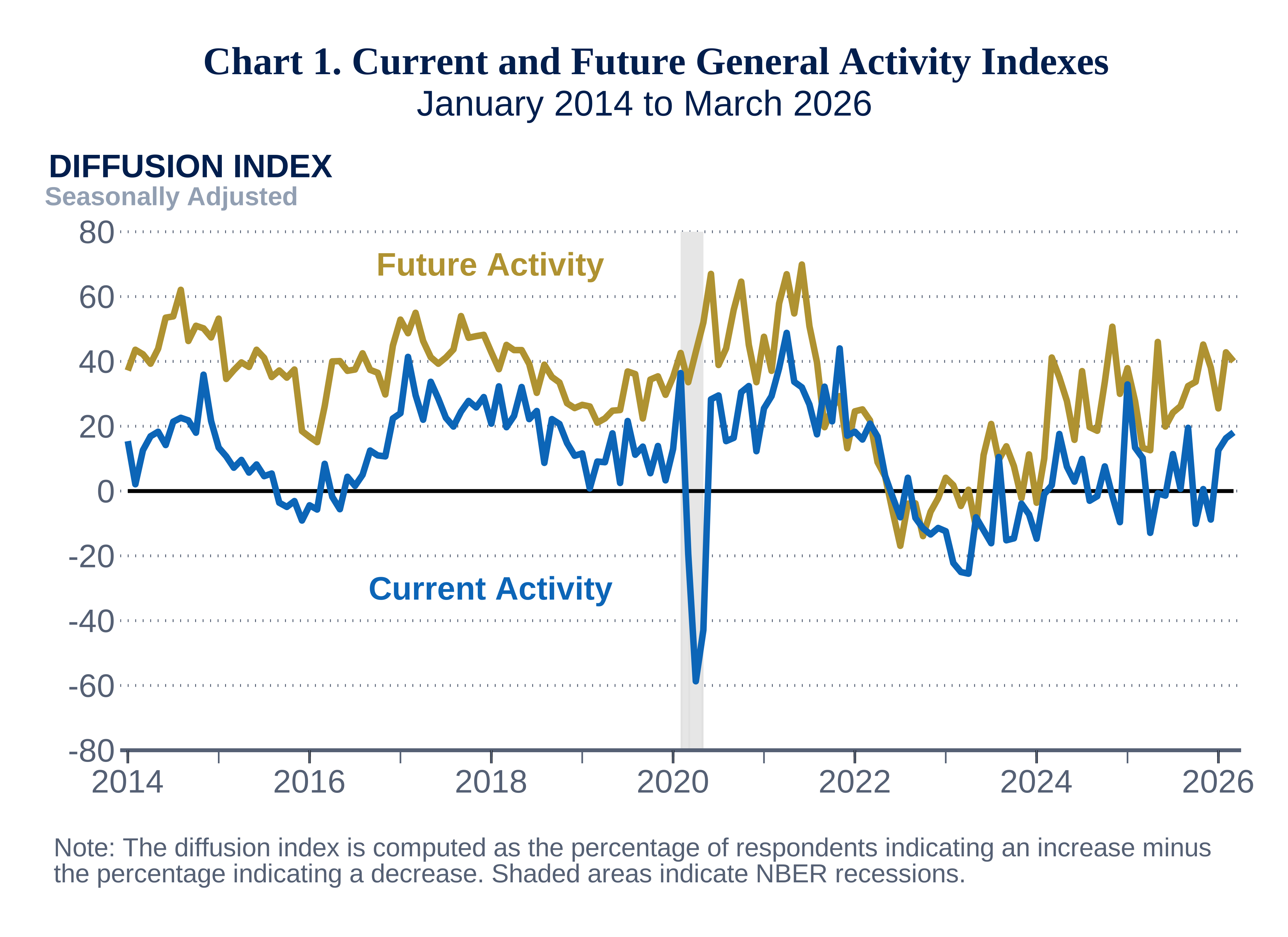
The diffusion index for current general activity rose from 16.3 in February to 18.1 in March, its third consecutive increase (see Chart 1). Over 39 percent of the firms reported increases, exceeding the 21 percent reporting decreases; 35 percent of the firms reported no change in current activity. The index for current new orders fell 3 points to 8.6, while the current shipments index rose 22 points to 22.2, its highest reading since January 2025. Over 40 percent of the firms reported increases in shipments (up from 22 percent last month), 18 percent reported decreases (down from 22 percent), and 42 percent reported no change in shipments (down from 50 percent). The inventories index ticked up 2 points to 1.4.
On balance, the firms reported mostly steady employment, and the employment index rose 2 points to 0.8 in March. More than 74 percent of the firms reported no change in employment levels this month; almost 13 percent reported increases, while 12 percent reported decreases. The average workweek index rose 14 points and turned positive at 2.8.
Price Indexes Remain Elevated
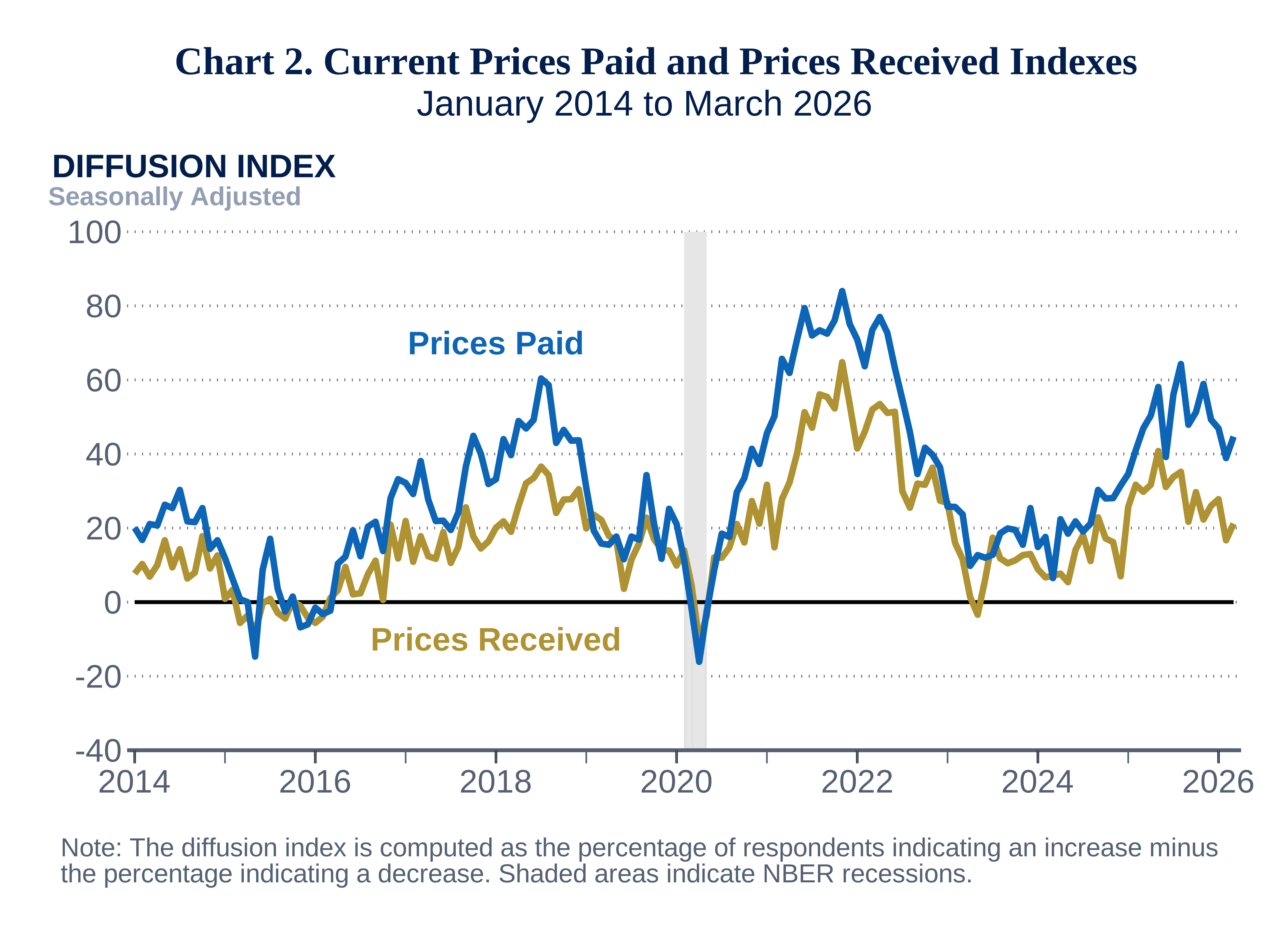
On balance, the firms continued to report overall increases in prices. The prices paid index rose 6 points to 44.7 in March, almost undoing its decline last month (see Chart 2). Nearly 46 percent of the firms reported increases in input prices, while 1 percent reported decreases; 53 percent reported no change. The current prices received index rose 5 points to 21.2. Over 21 percent of the firms reported increases in the prices of their own goods, nearly none reported decreases, and 75 percent reported no change.
Firms Report Higher Production, Little Change in Capacity Utilization This Quarter
In this month’s special questions, the firms were asked to estimate their total production growth for the first quarter ending this month compared with the fourth quarter of 2025. A higher share of the firms reported an increase in production (52 percent) than reported a decrease (30 percent). Regarding the firms’ capacity utilization for the current quarter and one year ago, the median current capacity utilization rate reported among the responding firms was unchanged at 70 to 80 percent.
Nearly 82 percent of the firms reported that uncertainty was at least a slight constraint to capacity utilization in the current quarter, up from 62 percent when the question was last asked in December. Looking ahead over the next three months, most of the firms expect the impacts of various factors to stay the same. However, 54 percent of the firms expect the impact of energy markets to worsen over the next three months, and 41 percent expect the impact of uncertainty to worsen.
Firms Continue to Expect Growth
The diffusion index for future general activity declined 3 points to 40.0 this month (see Chart 1). More than 56 percent of the firms expect an increase in activity over the next six months, exceeding the 16 percent that expect a decrease; 23 percent expect no change. The future new orders index fell 5 points to 49.6, while the future shipments index rose 6 points to 53.6. The firms continue to expect increases in employment over the next six months, and the future employment index jumped 26 points to 40.4. Both future price indexes remained above their long-run averages: The future prices paid index ticked down from 54.1 to 53.7, and the future prices received index fell 12 points to 38.4. The index for future capital expenditures rose 11 points to 25.8.
Summary
Responses to the March Manufacturing Business Outlook Survey suggest overall expansion in the region’s manufacturing activity. The indicators for current activity, new orders, and shipments were all positive. On balance, the firms continued to indicate overall increases in prices. The survey’s broad indicators for future activity continued to suggest expectations for growth over the next six months.
Special Questions (March 2026)
| An increase of: | % of firms | Subtotals |
|---|---|---|
| 10% or more | 25.9 | % of firms reporting an increase: 51.8 |
| 5-10% | 14.8 | |
| 0-5% | 11.1 | |
| No change | 18.6 | |
| A decline of: | ||
| 0-5% | 18.5 | % of firms reporting a decrease: 29.6 |
| 5-10% | 3.7 | |
| 10% or more | 7.4 |
Capacity Utilization Rate |
2026:Q1 % of Reporters |
2025:Q1 % of Reporters |
|---|---|---|
| Less than 30% | 0.0 | 3.7 |
| 30-40% | 0.0 | 7.4 |
| 40-50% | 7.4 | 7.4 |
| 50-60% | 14.8 | 7.4 |
| 60-70% | 18.5 | 11.1 |
| 70-80% | 33.3 | 44.4 |
| 80-90% | 14.8 | 11.1 |
| 90-100% | 11.1 | 7.4 |
| Median Utilization Rate | 70-80 | 70-80 |
|
Not at all (%) |
Slightly (%) |
Moderately (%) |
Significantly (%) |
|
|---|---|---|---|---|
| Energy markets | 60.7 | 17.9 | 14.3 | 7.1 |
| Financial capital | 88.9 | 0.0 | 11.1 | 0.0 |
| Labor supply | 40.7 | 29.6 | 14.8 | 14.8 |
| Supply chains | 34.6 | 53.8 | 7.7 | 3.8 |
| Uncertainty | 18.5 | 33.3 | 25.9 | 22.2 |
| Other factors | 81.3 | 6.3 | 12.5 | 0.0 |
|
Worsen (%) |
Stay the same (%) |
Improve (%) |
|
|---|---|---|---|
| Energy markets | 53.6 | 35.7 | 10.7 |
| Financial capital | 11.1 | 85.2 | 3.7 |
| Labor supply | 14.3 | 60.7 | 25.0 |
| Supply chains | 33.3 | 55.6 | 11.1 |
| Uncertainty | 40.7 | 33.3 | 25.9 |
| Other factors | 20.0 | 66.7 | 13.3 |
MBOS Summary of Returns – March 2026
| March vs. February |
Six Months from Now vs. March |
|||||||||||
|---|---|---|---|---|---|---|---|---|---|---|---|---|
|
Prev. Diff. Index |
Inc. | No ch. | Dec. |
Diff. Index |
Prev. Diff. Index |
Inc. | No ch. | Dec. | Diff. Index |
|||
| General Business Activity | 16.3 | 39.2 | 34.6 | 21.1 | 18.1 | 42.8 | 56.3 | 23.0 | 16.3 | 40.0 | ||
| New Orders | 11.7 | 30.3 | 48.1 | 21.7 | 8.6 | 54.1 | 62.1 | 20.2 | 12.6 | 49.6 | ||
| Shipments | 0.3 | 40.2 | 41.5 | 18.1 | 22.2 | 47.4 | 63.5 | 26.6 | 9.9 | 53.6 | ||
| Unfilled Orders | -12.9 | 18.4 | 54.9 | 23.1 | -4.7 | 21.4 | 27.8 | 53.2 | 12.5 | 15.3 | ||
| Delivery Times | -9.9 | 26.1 | 65.2 | 7.2 | 18.9 | 26.1 | 9.3 | 69.8 | 14.0 | -4.7 | ||
| Inventories | -0.2 | 19.1 | 62.9 | 17.7 | 1.4 | 12.4 | 34.3 | 35.1 | 17.5 | 16.8 | ||
| Prices Paid | 38.9 | 45.8 | 53.2 | 1.1 | 44.7 | 54.1 | 57.8 | 31.1 | 4.0 | 53.7 | ||
| Prices Received | 16.7 | 21.3 | 74.6 | 0.1 | 21.2 | 50.1 | 43.9 | 40.9 | 5.5 | 38.4 | ||
| Number of Employees | -1.3 | 12.5 | 74.3 | 11.7 | 0.8 | 14.9 | 41.4 | 57.4 | 1.0 | 40.4 | ||
| Average Employee Workweek | -11.6 | 19.9 | 62.9 | 17.2 | 2.8 | 27.7 | 26.3 | 68.3 | 2.2 | 24.1 | ||
| Capital Expenditures | -- | -- | -- | -- | -- | 14.4 | 26.6 | 67.1 | 0.7 | 25.8 | ||
| Notes: (1) Diffusion indexes represent the percentage of respondents indicating an increase minus the percentage indicating a decrease. (2) All data are seasonally adjusted. (3) Percentages may not sum to 100 because of rounding, omission by respondents, or both. (4) Survey results reflect data received through March 16, 2026. Federal Reserve Bank of Philadelphia Manufacturing Business Outlook Survey Released: March 19, 2026, at 8:30 a.m. ET. |
||||||||||||