Manufacturing Business Outlook Survey
January 2026 Report
Jump to
Summary of ReturnsView a PDF version of this report | View a TXT version of this report
Manufacturing activity in the region increased overall, according to the firms responding to the January Manufacturing Business Outlook Survey. The survey’s indicator for general activity rose and turned positive. The new orders and shipments indexes also moved higher. The employment index declined but continues to suggest overall increases in employment. The price indexes remained well above their long-run averages. Most of the survey’s broad indicators for future activity declined but continued to suggest expectations for overall growth over the next six months.
Current Indicators Rise
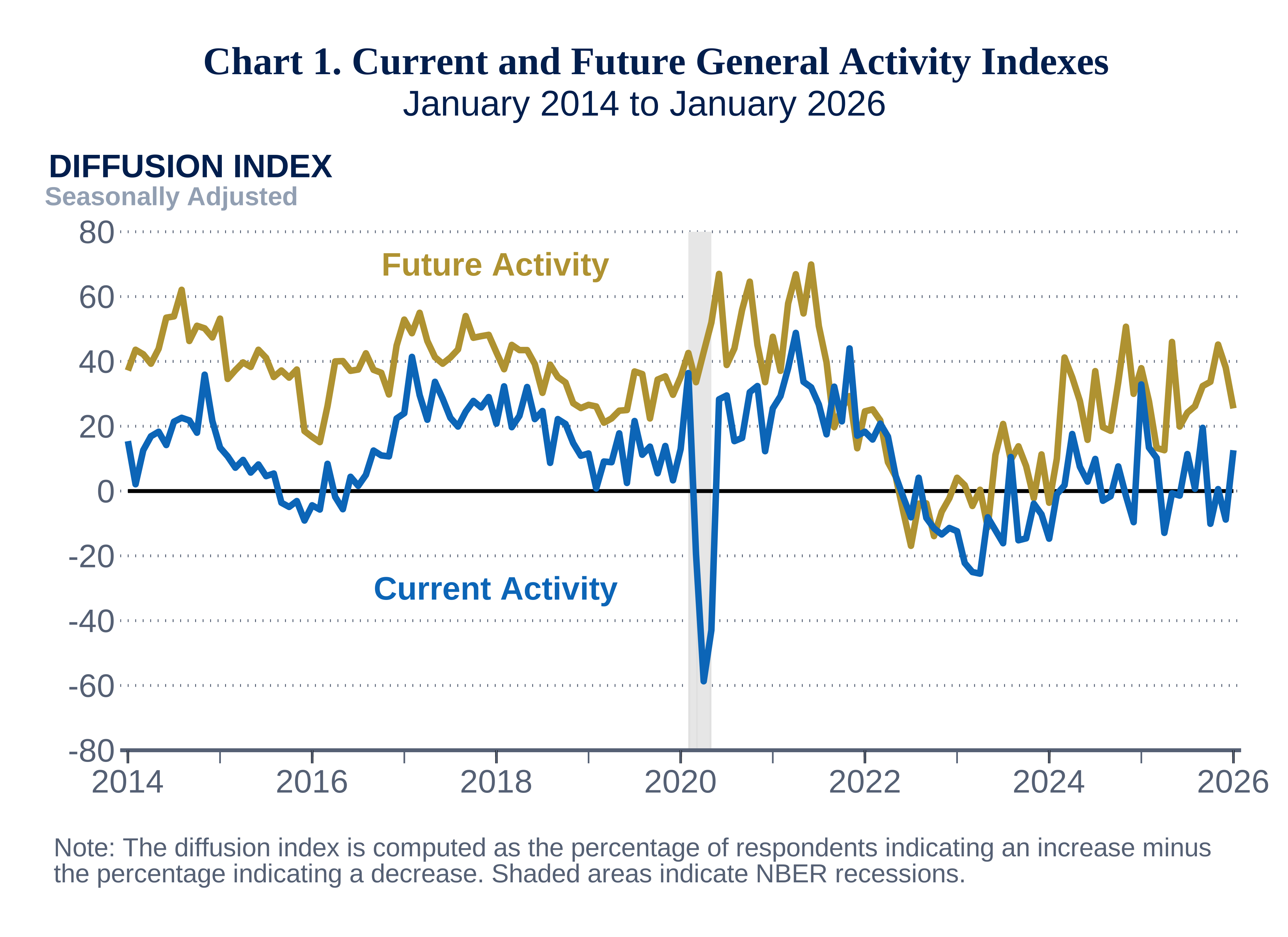
The diffusion index for current general activity jumped from a revised reading of -8.8 in December to 12.6 in January, its highest reading since September (see Chart 1).* Over 23 percent of the firms reported increases (up from 21 percent last month), exceeding the 11 percent reporting decreases (down from 30 percent); 63 percent of the firms reported no change in current activity (up from 50 percent). Both the indexes for current new orders and current shipments also rose in January. The new orders index rose 9 points to 14.4, and the shipments index increased 6 points to 9.5. Meanwhile, the inventories index fell 17 points to -8.4, its lowest level since July 2024.
On balance, the firms continued to report an increase in employment, although the employment index declined 3 points to 9.7 in January. Almost 70 percent of the firms reported no change in employment levels this month (down from 83 percent last month); nearly 20 percent reported increases (up from 14 percent), while 10 percent reported decreases (up from less than 1 percent). The average workweek index similarly moved lower, declining from 12.5 to 9.1.
Price Indexes Remain Well Above Long-Run Averages
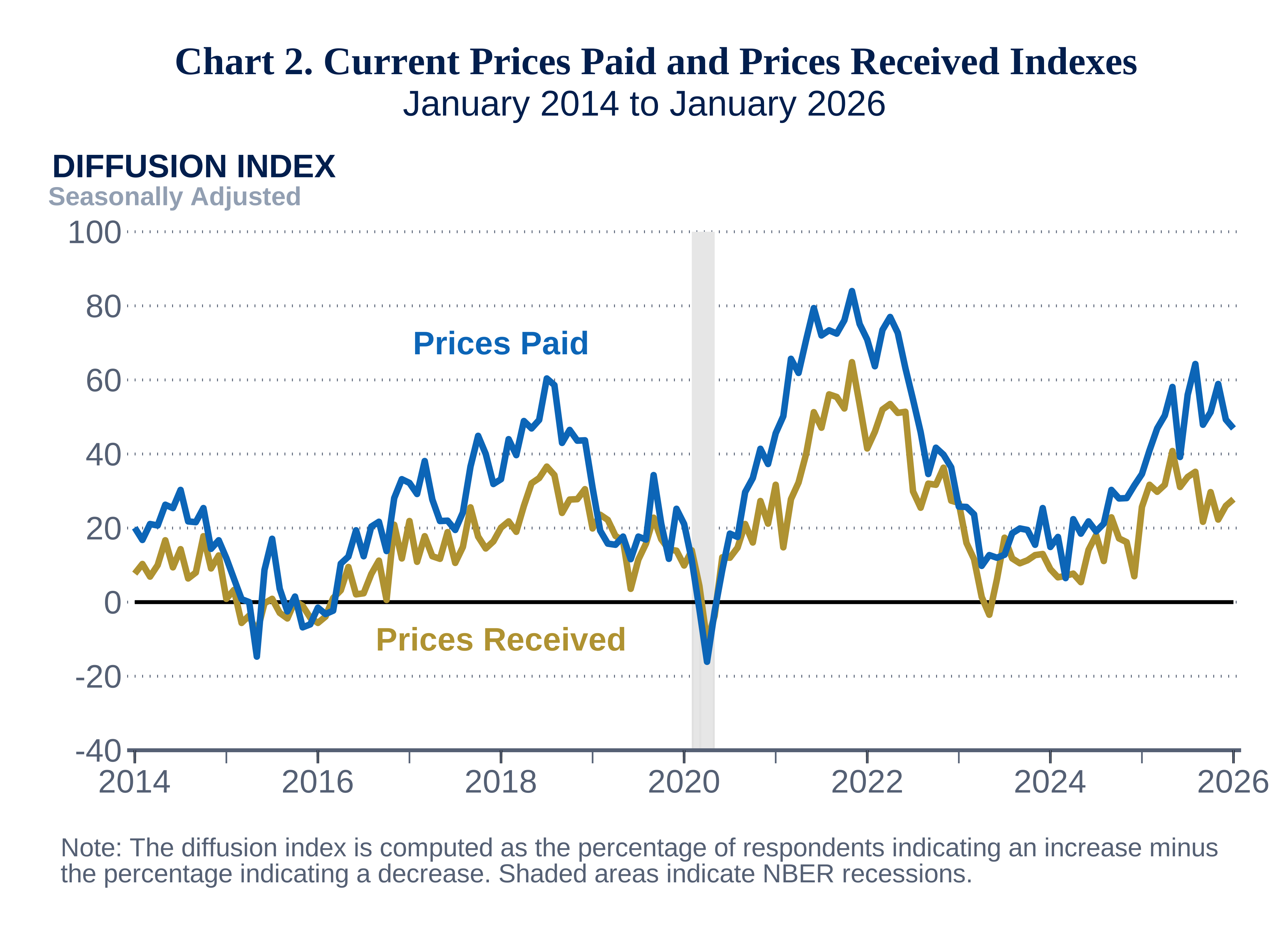
On balance, the firms continued to report overall increases in prices. The prices paid index edged down 2 points to 46.9 in January, its second consecutive decrease and its lowest level since June (see Chart 2). Nearly 47 percent of the firms reported increases in input prices, while none reported decreases; 53 percent reported no change. The current prices received index ticked up 2 points to 27.8. Over 31 percent of the firms reported increases in the prices of their own goods, 3 percent reported decreases, and 66 percent reported no change.
Firms Expect Smaller Input Cost Increases for 2026
In this month’s special questions, the firms were asked about changes in their various input and labor costs over the past year and their expectations for changes in costs for the coming year. For all three input categories, the average percent change in costs expected for 2026 was smaller than the average percent change in costs reported for 2025. Meanwhile, the average percent change in all four labor cost categories for this year was equal to or greater than last year’s reported change. The respondents were also asked to rank the importance of various factors in setting prices. Maintaining steady profit margins was the most important factor, followed by demand for their own goods/services, wage and labor costs, and nonlabor costs.
Firms Continue to Expect Growth
The diffusion index for future general activity declined from a revised reading of 38.1 in December to 25.5 in January (see Chart 1), its lowest reading since July. Nearly 35 percent of the firms expect an increase in activity over the next six months, exceeding the 9 percent that expect a decrease; 37 percent expect no change. The future new orders index fell 6 points to 32.9, while the future shipments index ticked up 1 point to 40.8. On balance, the firms continue to expect increases in employment over the next six months, and the future employment index rose 4 points to 28.8. Both future price indexes were well above their long-run averages: The future prices paid index rose 2 points to 66.6; the future prices received index moved up 5 points to 61.8. The index for future capital expenditures edged up 1 point to 30.3.
Summary
Responses to the January Manufacturing Business Outlook Survey suggest overall expansion in the region’s manufacturing activity. The indicators for current activity, new orders, and shipments all rose, with the current activity index turning positive this month. On balance, the firms continued to indicate overall increases in prices, and both price indexes remained well above their long-run averages. The firms also continued to report higher employment levels, although the employment index edged lower. Most of the survey’s broad indicators for future activity declined but continued to suggest expectations for growth over the next six months.
* The survey’s annual data revisions, which incorporate updated seasonal factors, were released on January 8, 2026. The full history of revised data is available here.
Special Questions (January 2026)
|
2025 (Actual) |
2026 (Expected) |
|||
|---|---|---|---|---|
|
Average (%) |
Median (%) |
Average (%) |
Median (%) |
|
| Energy | 4.0 | 3–4 | 3.6 | 2–3 |
| Other Raw Materials | 3.8 | 3–4 | 3.4 | 3–4 |
| Intermediate Goods | 3.5 | 2–3 | 2.7 | 2–3 |
| Wages | 3.1 | 3–4 | 3.1 | 3–4 |
| Health Benefits | 5.9 | 4–5 | 6.5 | 4–5 |
| Nonhealth Benefits | 2.7 | 2–3 | 3.0 | 2–3 |
| Wages + Health Benefits + Nonhealth Benefits | 5.3 | 4–5 | 6.5 | 4–5 |
| Note: Respondents selected ranges of percentage changes. The average percent change is calculated using the midpoints of the ranges of each answer option. | ||||
| Weighted Average* (%) |
|
|---|---|
| Your competitors' prices | 66 |
| The strength of demand for your most important good(s) or service(s) | 74 |
| Your wages and labor costs (including benefits) | 75 |
| Your nonlabor costs, such as energy prices, materials prices, transportation costs, rent, etc. | 74 |
| Maintaining steady profit margins (for price over costs) | 77 |
| Interest rates, borrowing rates, and the cost of capital | 38 |
| Problems with your supply chains, such as bottlenecks and product shortages | 42 |
| The overall rate of inflation in the U.S. economy, as measured by the Consumer Price Index | 53 |
| Other | 50 |
| * Respondents reported importance on a scale of 1 (least important) to 5 (most important). The weighted average gives 1 a weight of 0; 2 a weight of 0.25; 3 a weight of 0.5; 4 a weight of 0.75; and 5 a weight of 1. | |
MBOS Summary of Returns – January 2026
| January vs. December |
Six Months from Now vs. January |
|||||||||||
|---|---|---|---|---|---|---|---|---|---|---|---|---|
|
Prev. Diff. Index |
Inc. | No ch. | Dec. |
Diff. Index |
Prev. Diff. Index |
Inc. | No ch. | Dec. | Diff. Index |
|||
| General Business Activity | -8.8 | 23.1 | 63.1 | 10.5 | 12.6 | 38.1 | 34.9 | 36.7 | 9.3 | 25.5 | ||
| New Orders | 5.7 | 28.3 | 53.8 | 13.9 | 14.4 | 39.1 | 47.1 | 38.8 | 14.2 | 32.9 | ||
| Shipments | 3.2 | 27.3 | 54.9 | 17.8 | 9.5 | 39.9 | 52.5 | 33.1 | 11.7 | 40.8 | ||
| Unfilled Orders | -6.0 | 8.8 | 74.2 | 13.6 | -4.8 | 11.3 | 24.6 | 56.2 | 18.0 | 6.6 | ||
| Delivery Times | 5.2 | 10.0 | 87.3 | 2.7 | 7.3 | 12.4 | 12.6 | 74.4 | 13.0 | -0.4 | ||
| Inventories | 8.4 | 5.8 | 80.0 | 14.2 | -8.4 | -1.5 | 23.8 | 59.7 | 16.5 | 7.3 | ||
| Prices Paid | 49.3 | 46.9 | 53.1 | 0.0 | 46.9 | 64.6 | 66.6 | 33.4 | 0.0 | 66.6 | ||
| Prices Received | 26.0 | 31.1 | 65.7 | 3.3 | 27.8 | 57.2 | 62.4 | 34.7 | 0.6 | 61.8 | ||
| Number of Employees | 13.0 | 19.8 | 70.1 | 10.1 | 9.7 | 24.7 | 30.1 | 68.5 | 1.3 | 28.8 | ||
| Average Employee Workweek | 12.5 | 10.7 | 87.7 | 1.6 | 9.1 | 17.7 | 16.9 | 78.3 | 1.9 | 15.0 | ||
| Capital Expenditures | -- | -- | -- | -- | -- | 29.1 | 33.4 | 63.5 | 3.1 | 30.3 | ||
| Notes: (1) Diffusion indexes represent the percentage of respondents indicating an increase minus the percentage indicating a decrease. (2) All data are seasonally adjusted. (3) Percentages may not sum to 100 because of rounding, omission by respondents, or both. (4) Survey results reflect data received through January 12, 2026. Federal Reserve Bank of Philadelphia Manufacturing Business Outlook Survey Released: January 15, 2026, at 8:30 a.m. ET. |
||||||||||||