Nonmanufacturing Business Outlook Survey
April 2026 Report
Jump to
Summary of ReturnsView a PDF version of this report | View a TXT version of this report
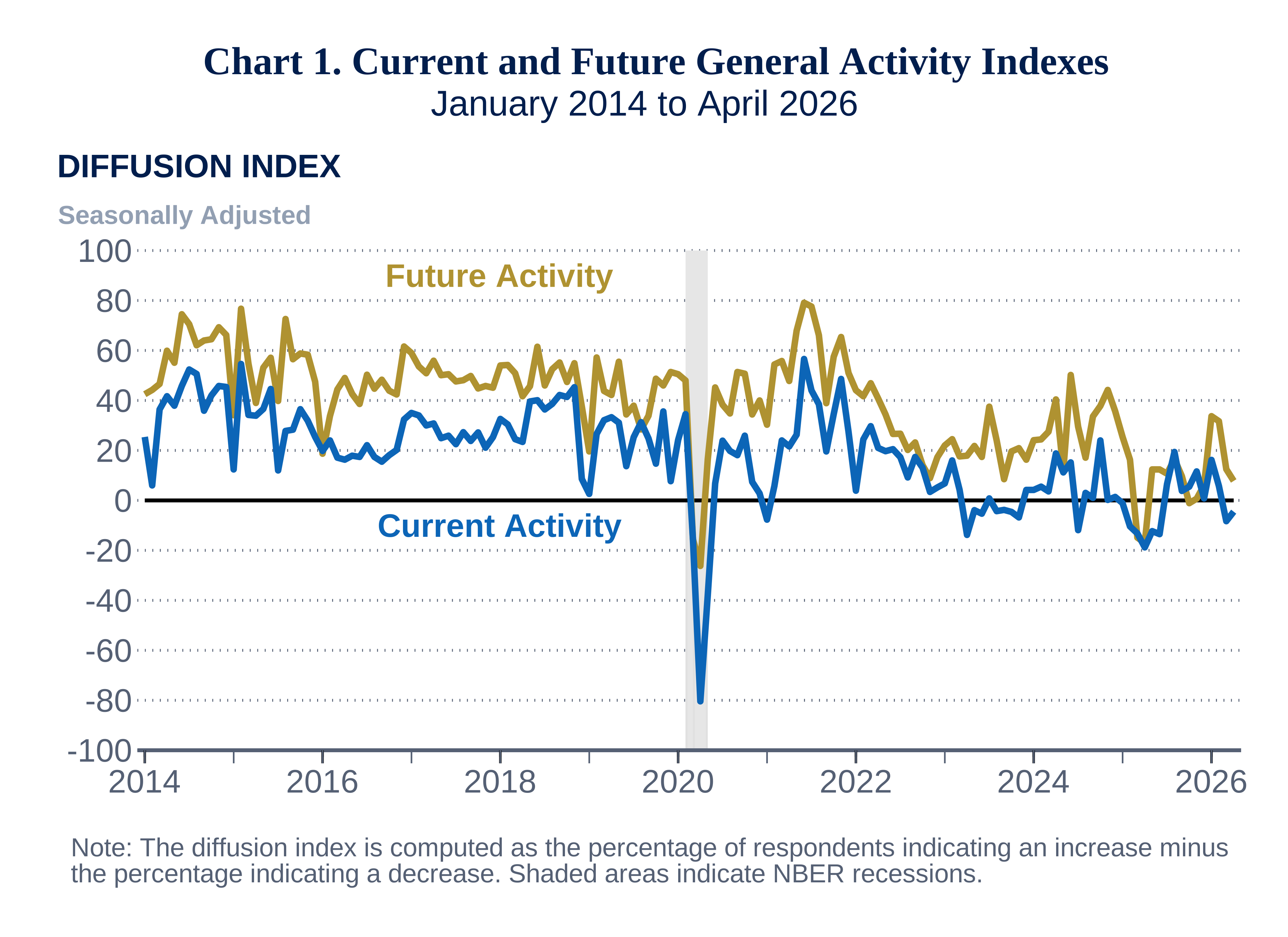
Nonmanufacturing activity in the region declined for the second consecutive month, according to the firms responding to the April Nonmanufacturing Business Outlook Survey. The index for general activity at the firm level remained negative, the index for new orders fell further, and the sales/revenues index fell but remained positive. Although the full-time employment index improved, it remained negative. Increases in prices paid were more widespread, but expectations for growth over the next six months were less widespread this month.
Current Indexes Are Weak
The diffusion index for current general activity at the firm level rose 4 points to -4.5, its second consecutive negative reading (see Chart 1). Thirty-one percent of the firms reported increases, 36 percent reported decreases, and 33 percent reported no change in activity. The new orders index fell 12 points to -16.9, its third consecutive negative reading and its lowest level since April 2023. Almost 14 percent of the firms reported increases in new orders, but 31 percent reported decreases; 26 percent reported no change. The sales/revenues index fell 11 points to 2.5, its lowest reading since May 2025. The regional activity index remained negative but rose 7 points to -16.5.
Full-Time Employment Index Remains Negative
The full-time employment index increased 7 points to -4.7 this month. Almost 20 percent of the firms reported decreases in full-time employment, 15 percent reported increases, and 66 percent reported steady employment levels. The part-time employment index rose 9 points to 1.8 this month.
Firms Continue to Report Price Increases
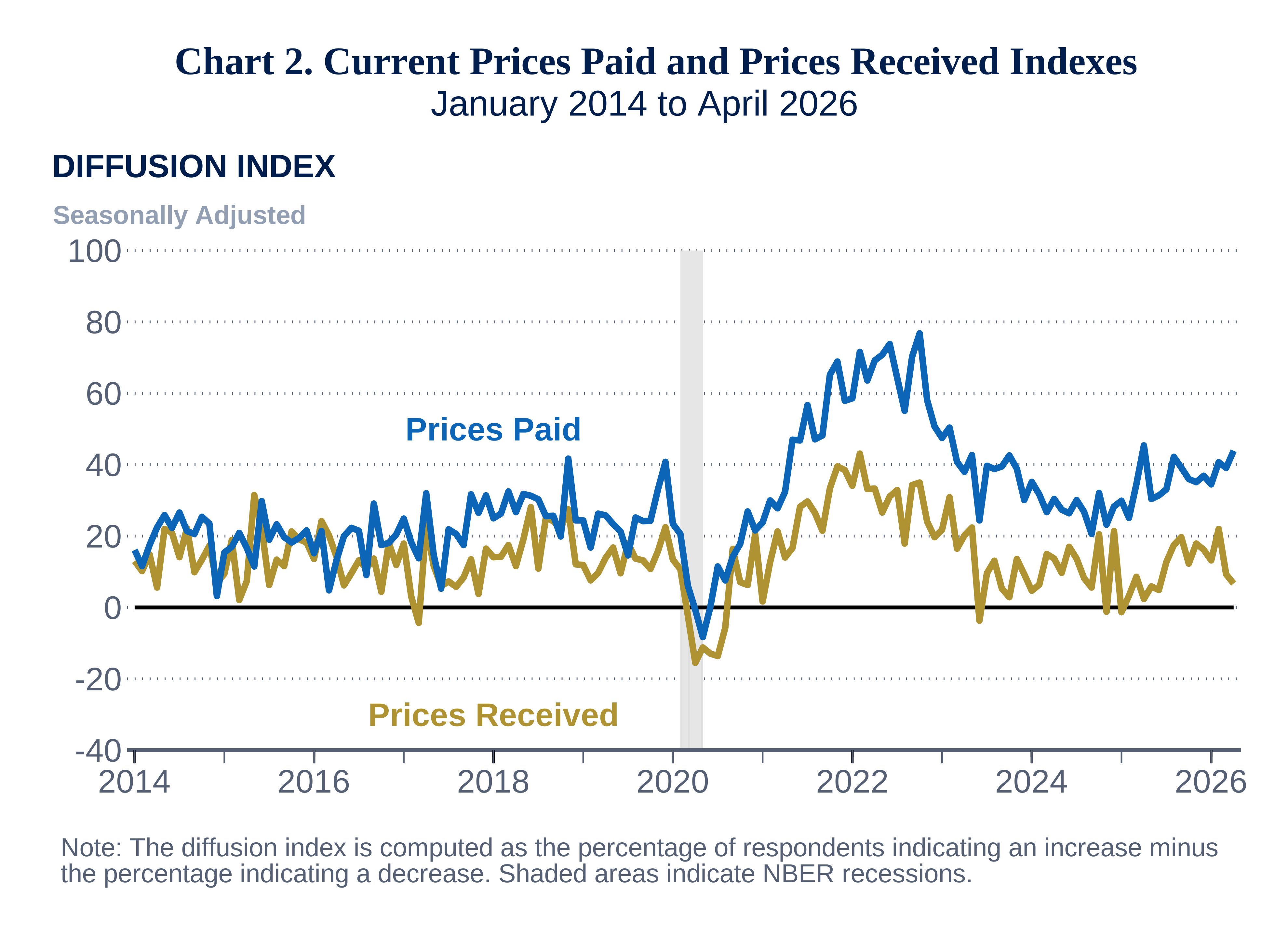
The prices paid index moved up 5 points to 43.9, its highest reading since April 2025 (see Chart 2). More than 50 percent of the respondents reported higher input prices (up from 44 percent last month), 26 percent reported no change (down from 36 percent), and 6 percent reported decreases (up from 4 percent). Regarding prices for the firms’ own goods and services, the prices received index declined 3 points to 6.7 this month, its lowest reading since June. Twenty-one percent of the firms reported increases in prices received, and 14 percent reported decreases. Fifty percent of the firms reported no change in prices for their own goods and services.
Firms Continue to Expect Increases in Wages
In this month's special questions, the firms were asked about changes in wage rates and compensation packages over the past three months, as well as their updated expectations for changes in various input and labor costs for the current year. Twenty-seven percent of the firms indicated wages and compensation costs had increased over the past three months, 65 percent reported no change, and 8 percent reported decreases. In terms of changes since the beginning of the year to their 2026 plan for wages and compensation, one-third of the firms reported that they are planning for an increase, 8 percent reported they are planning for a decrease, and 58 percent have not made any changes.
Expectations for various costs for labor and inputs either held steady or moved up compared with when the firms were last asked in January. Expected increases in the cost of wages remained unchanged in the range of 3 to 4 percent, but expectations for total compensation moved up from a range of 5 to 7.5 percent to a range of 7.5 to 10 percent. The median expected increase in energy costs jumped from 1 to 2 percent to 5 to 7.5 percent.
Firms Anticipate Growth
The respondents continue to expect growth at their own firms over the next six months, but expectations were less widespread this month. The diffusion index for future general activity at the firm level fell 5 points to 7.8, its lowest reading since December (see Chart 1). Almost 39 percent of the firms expect an increase in activity at their firms over the next six months, 31 percent expect decreases, and 30 percent expect no change. The future regional activity index rose 8 points to 6.7.
Summary
Responses to this month’s Nonmanufacturing Business Outlook Survey suggest an overall decline in nonmanufacturing activity among the firms in the region. The indicator for the firm-level general activity remained negative, while the new orders index fell further. The sales/revenues index remained positive but moved lower. The full-time employment index continued to suggest overall decreases in employment. The price indexes moved in different directions but continued to indicate increases in prices. Expectations for growth at the firm level over the next six months were less widespread this month.
Special Questions (April 2026)
|
|
Percent (%) |
|---|---|
| Increased | 27.0 |
| No change | 64.9 |
| Decreased | 8.1 |
|
|
Percent (%) |
|---|---|
| Yes, and we are planning to increase wage rates and compensation packages. | 33.3 |
| Yes, and we are planning to decrease wage rates and compensation packages. | 8.3 |
| No, we have not made changes to wage rates and compensation packages. | 58.3 |
| Energy (%) |
Other Raw Materials (%) |
Intermediate Goods (%) |
Wages (%) |
Health Benefits (%) |
Nonhealth Benefits (%) |
Wages + Health Benefits + Nonhealth Benefits (%) | |
|---|---|---|---|---|---|---|---|
| Decline of more than 1% | 7.1 | 0.0 | 0.0 | 3.4 | 10.7 | 0.0 | 4.0 |
| No change | 3.6 | 17.6 | 20.0 | 24.1 | 3.6 | 41.7 | 8.0 |
| Increase of 1–2% | 0.0 | 11.8 | 13.3 | 0.0 | 0.0 | 4.2 | 0.0 |
| Increase of 2–3% | 3.6 | 11.8 | 13.3 | 20.7 | 3.6 | 8.3 | 8.0 |
| Increase of 3–4% | 7.1 | 11.8 | 0.0 | 31.0 | 7.1 | 12.5 | 8.0 |
| Increase of 4–5% | 25.0 | 17.6 | 26.7 | 13.8 | 10.7 | 16.7 | 0.0 |
| Increase of 5–7.5% | 17.9 | 5.9 | 6.7 | 3.4 | 3.6 | 4.2 | 20.0 |
| Increase of 7.5–10% | 7.1 | 17.6 | 13.3 | 0.0 | 28.6 | 12.5 | 16.0 |
| Increase of 10–12.5% | 10.7 | 0.0 | 0.0 | 3.4 | 10.7 | 0.0 | 16.0 |
| Increase of more than 12.5% | 17.9 | 5.9 | 6.7 | 0.0 | 21.4 | 0.0 | 20.0 |
| Median Expected Change | 5–7.5 | 3–4 | 4–5 | 3–4 | 7.5–10 | 2–3 | 7.5–10 |
|
Median Expected Change (Jan. 2026) |
1–2 | 2–3 | 1–2 | 3–4 | 7.5–10 | 2–3 | 5–7.5 |
| *The firms responded to more detailed changes than shown in the provided ranges. | |||||||
NBOS Summary of Returns – April 2026
| April vs. March | |||||||
|---|---|---|---|---|---|---|---|
|
Previous Diffusion Index |
Increase | No change | Decrease |
Diffusion Index |
|||
| What is your assessment of general business activity for the region? | -23.9 | 21.4 | 32.7 | 37.9 | -16.5 | ||
| What is your assessment of general business activity for your firm? | -8.3 | 31.0 | 33.4 | 35.6 | -4.5 | ||
| Company Business Indicators | |||||||
| New Orders | -4.7 | 13.8 | 25.9 | 30.7 | -16.9 | ||
| Sales or Revenues | 13.2 | 29.2 | 44.0 | 26.8 | 2.5 | ||
| Unfilled Orders | -6.5 | 4.1 | 23.6 | 18.2 | -14.1 | ||
| Inventories | -0.2 | 3.0 | 18.8 | 5.1 | -2.1 | ||
| Prices Paid | 39.1 | 50.2 | 25.8 | 6.2 | 43.9 | ||
| Prices Received | 9.3 | 21.0 | 50.2 | 14.3 | 6.7 | ||
| Number of Employees – Full-Time Permanent | -11.3 | 14.8 | 65.7 | 19.5 | -4.7 | ||
| Number of Employees – Part-Time, Temporary, and Contract | -7.2 | 11.5 | 74.0 | 9.7 | 1.8 | ||
| Average Employee Workweek | 4.8 | 10.9 | 73.8 | 11.4 | -0.5 | ||
| Wage and Benefit Costs | 34.3 | 28.9 | 62.3 | 5.4 | 23.5 | ||
| Capital Expenditures – Physical Plant | -3.0 | 11.6 | 41.5 | 11.8 | -0.2 | ||
| Capital Expenditures – Equipment and Software | 3.3 | 26.4 | 48.1 | 10.1 | 16.3 | ||
| Six Months from Now vs. April | |||||||
|
Previous Diffusion Index |
Increase | No change | Decrease |
Diffusion Index |
|||
| What is your assessment of general business activity for the region? | -1.6 | 35.0 | 33.6 | 28.4 | 6.7 | ||
| What is your assessment of general business activity for your firm? | 12.5 | 38.8 | 30.2 | 31.0 | 7.8 | ||
| Notes: (1) Diffusion indexes represent the percentage of respondents indicating an increase minus the percentage indicating a decrease. (2) All data are seasonally adjusted. (3) Percentages may not sum to 100 because of rounding, omission by respondents, or both. (4) Survey results reflect data received through April 16, 2026. Federal Reserve Bank of Philadelphia Nonmanufacturing Business Outlook Survey Released: April 21, 2026, at 8:30 a.m. ET. |
|||||||