Large Bank Credit Card and Mortgage Data 2025 Q4 Narrative
Q4 2025 Insights Report
by Gene Huang & Jeremy Cohn
Published: April 8, 2026
First Mortgage Credit Performance Remains Solid, While Card Delinquencies Moderate
The fourth quarter of 2025 marked modest improvements in credit performance for credit card accounts, with early-stage delinquency declining from a series high two years earlier. That said, credit card performance remains stressed relative to pre-pandemic norms. Furthermore, credit card interest rates are historically high, a considerable burden for cardholders who carry credit card debt. Credit card originations rose in the fourth quarter, and large banks were more willing to offer card services to less creditworthy consumers, with slightly looser application standards.
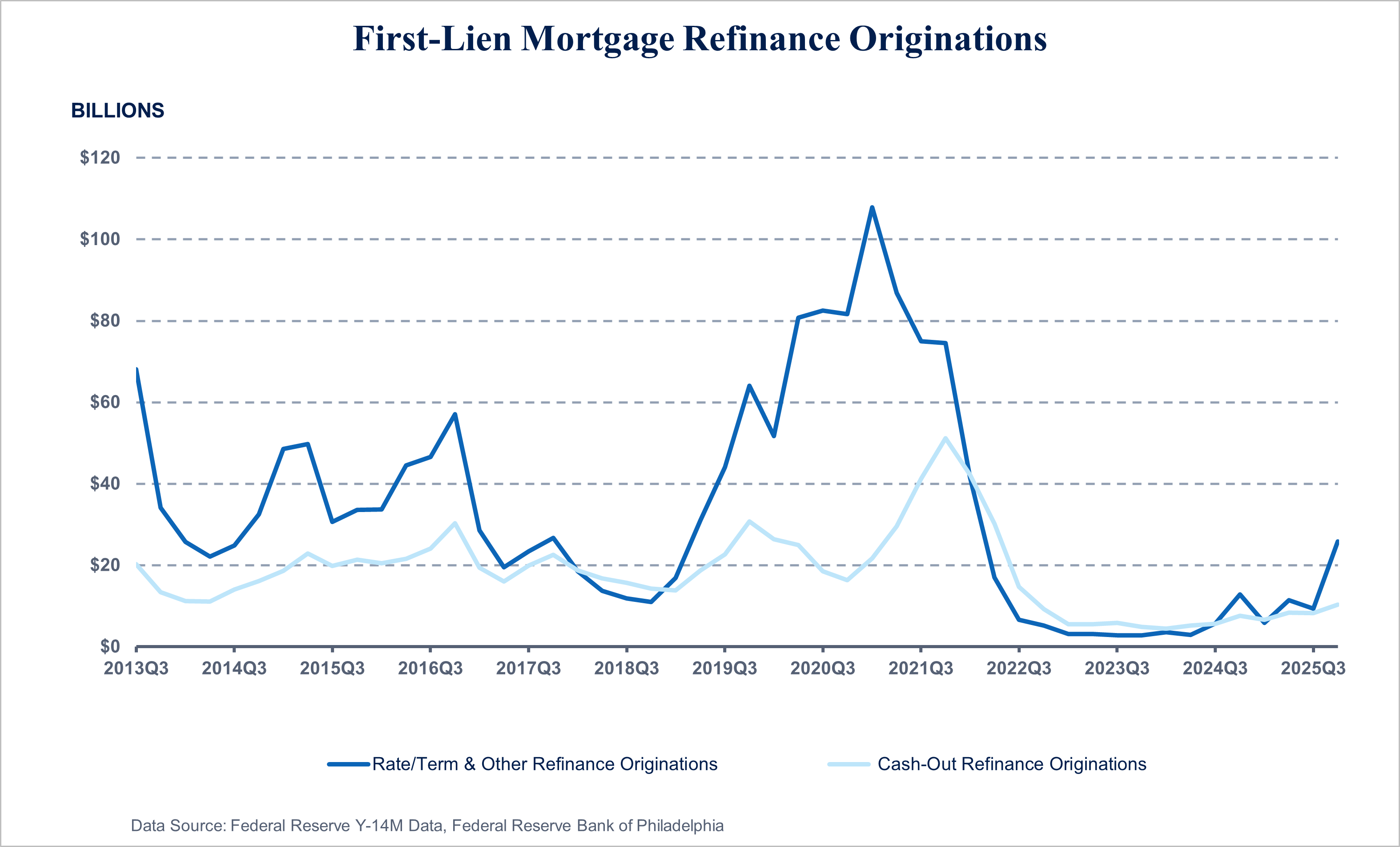
First-lien mortgage credit performance remains strong, with delinquencies steady near series lows. With mortgage rates declining in the fourth quarter, refinance originations showed renewed activity.
For additional questions or feedback about these data and this report, please email Phil.LargeBankData@phil.frb.org.
Credit Card Interest Rates Remain High
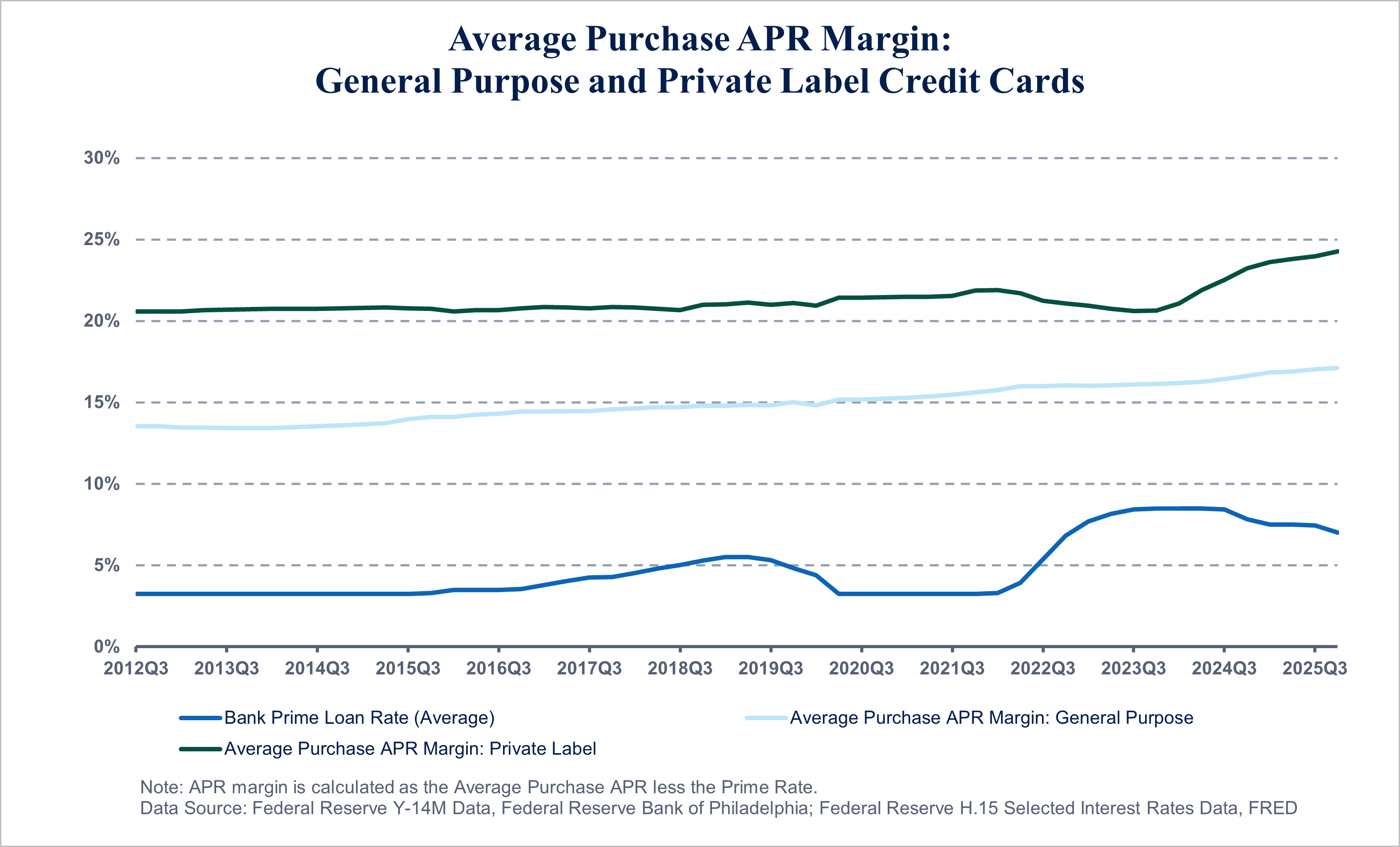
Credit card average purchase annual percentage rates (APRs) for both general purpose and private label credit cards remain near their series highs going back to 2012. The average purchase APR for general purpose cards is currently 24.1 percent, while the average purchase APR for private label cards, historically higher in part because of looser underwriting practices, is even greater, currently at 31.3 percent. Adjusting for the prime rate, the interest rate margins for both general purpose and private label cards are at all-time highs in the data series. Thus, controlling for prevailing interest rates, the cost to borrowers of not paying their credit card balances in full each month is notably higher than several years ago. There were also fewer cardholders on promotional APR contracts in 2025, with less than 12 percent of accounts benefiting from promotions, the lowest share since 2021.
Credit Card Delinquency Rates Improve, and Payment Behavior Strengthens
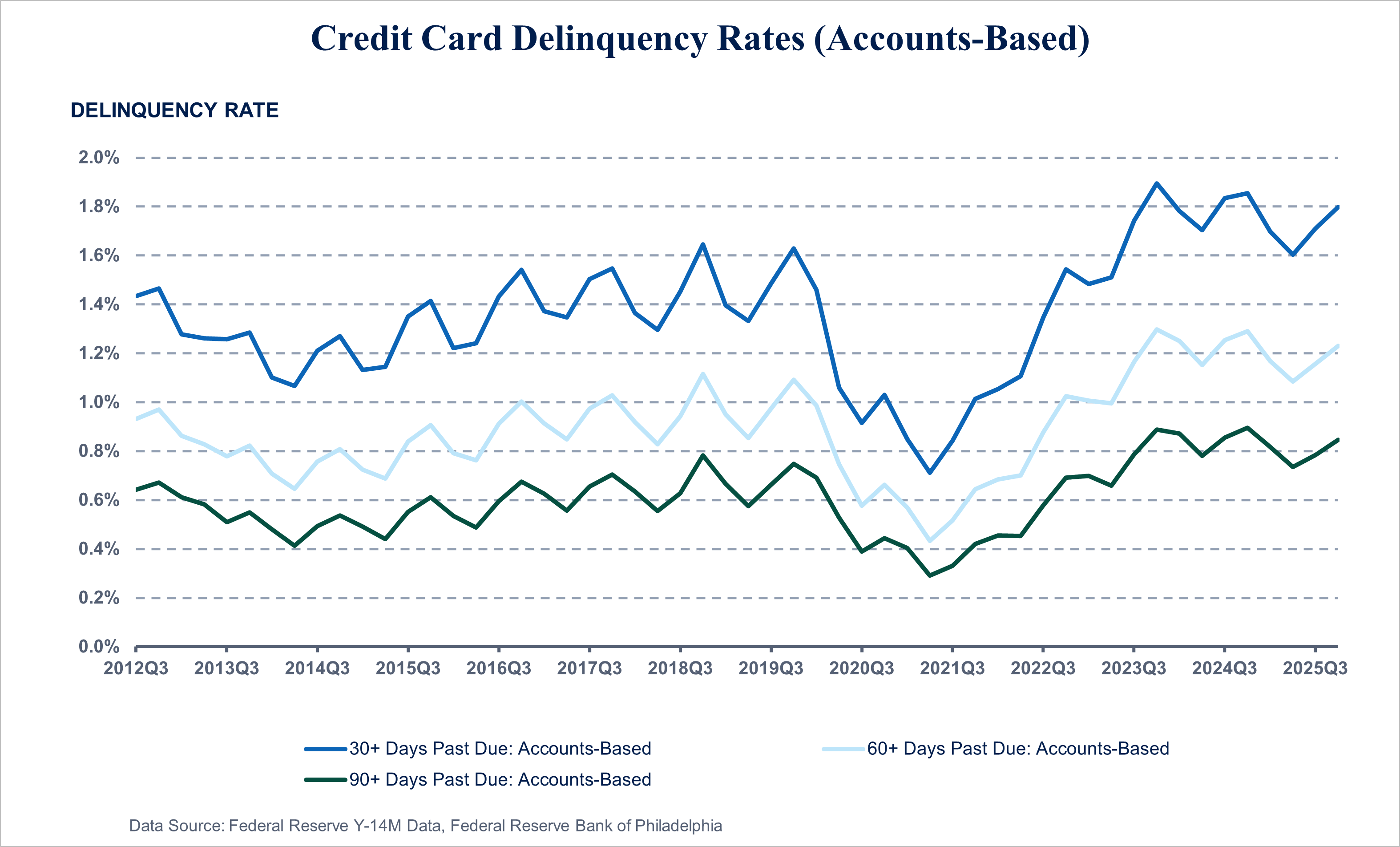
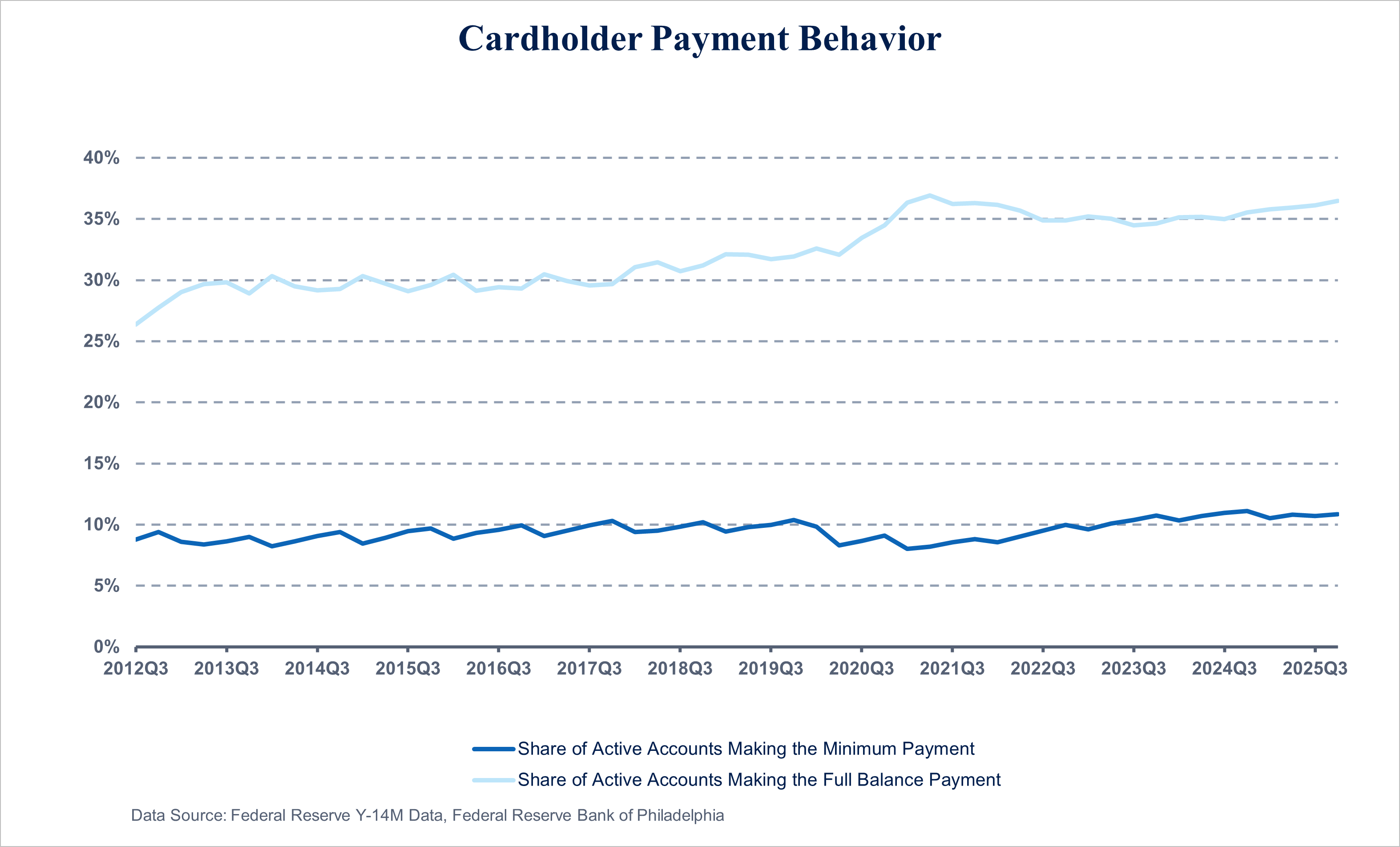
Credit card 30-day and 60-day delinquency rates declined slightly from a year ago across both accounts and balances. That said, delinquency rates at large banks remain notably above pre-pandemic levels. Compared with a year ago, large banks also reported a higher share of active credit card accounts making the full balance payment and a decline in those making only the minimum payment.
Card Originations Increase Sharply from a Year Ago as Banks Loosen Standards
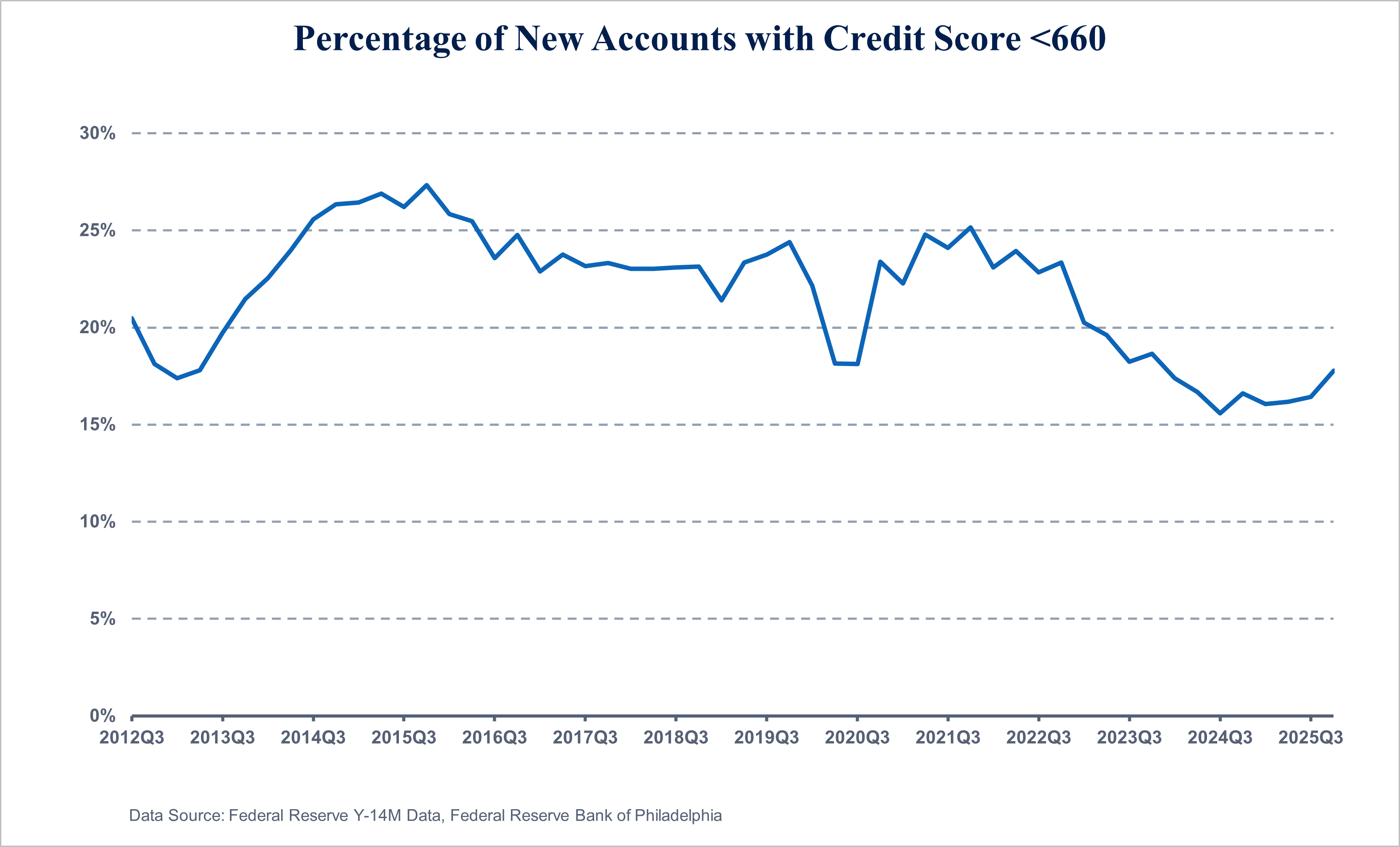
Total balances associated with the large banks’ first-lien mortgage portfolios stood at $1.45 trillion at the end of the third quarter, virtually unchanged from a year earlier. In real terms, outstanding Credit card dollar originations rose substantially in the fourth quarter of 2025, up 9.6 percent from the fourth quarter of 2024. Total commitments rose 4.3 percent, as the median credit limit increased 4 percent. Lenders stretched into lower credit segments. Accounts with scores below 660 increased as a share of new accounts to 17.8 percent, up from 16.4 percent in the prior quarter and 16.6 percent from one year ago. Consistent with this trend, large banks reported slightly loosening card underwriting standards in the latest Senior Loan Officer Opinion Survey.
First-Lien Mortgage Delinquencies Remain Low, While Refinance Activity Picks Up
First-lien mortgage credit performance remained strong, with delinquencies hovering near series lows. The favorable credit performance may be attributable to strong home price appreciation post-pandemic, which helped borrowers build equity, as well as healthier borrower profiles resulting from stringent origination policies after the Great Recession. Large bank total first-lien balances have been relatively flat over the past three years, whereas the overall U.S. mortgage market has grown about 10 percent during the same period, according to Federal Reserve Bank of New York Consumer Credit Panel/Equifax data.
With mortgage rates at two-year lows in fourth quarter 2025, rate-sensitive borrowers refinanced their mortgages to reduce payments or extract home equity. On a year-over-year basis, rate/term refinance originations doubled from $12.8 billion in the fourth quarter of 2024 to $25.8 billion in the fourth quarter of 2025. Cash-out refinance also increased by more than one-third, rising from $7.6 billion to $10.4 billion in the same period.
- Disclaimer: The views expressed in this report are solely those of the authors and do not necessarily reflect the views of the Federal Reserve Bank of Philadelphia or the Federal Reserve System.
Note that historical data will be revised periodically for firms that have started or stopped reporting FR Y-14M data and the panel of published FR Y-14M reporters is adjusted. Therefore, historical values may change over time. Please see our data methodology for further details.