

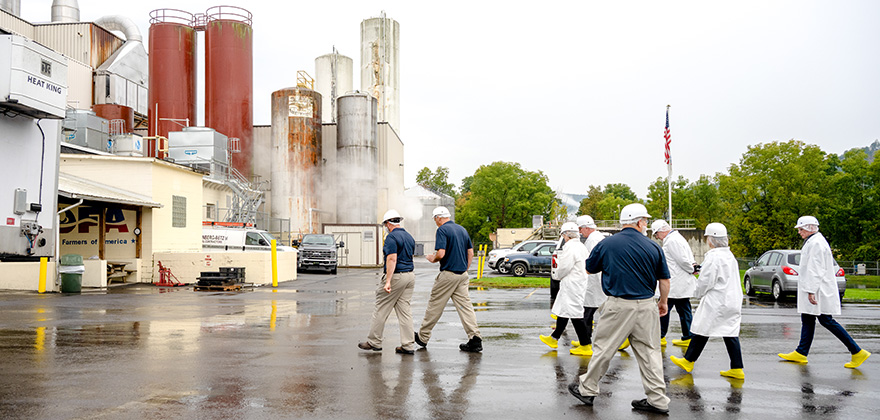
Driving along Route 287 in Tioga County, silos rise above the horizon — landmarks of the rural economy. On Milk Plant Road, wide lanes welcome trucks from Pennsylvania, New York, New Jersey, and Maryland delivering milk for processing into nonfat powder and cream.
This plant is operated by Dairy Farmers of America, a cooperative supporting small family dairy farms. Philadelphia Fed President and CEO Anna Paulson visited the plant to kick off a two-day tour of Wellsboro, in Tioga County, and nearby Williamsport, in Lycoming County.
President Paulson regularly talks with residents and local leaders across the Philadelphia Fed's Third District to get a sense of how communities are faring. These conversations help her bring local, on-the-ground perspectives into national discussions about monetary policy. Understanding how Pennsylvania's communities are adapting to change and planning for the future is a key part of understanding — and helping strengthen — the region's economic health.
The Engine of a Rural Economy
Dairy doesn’t match natural gas’s economic impact, but it injects an estimated $630 million1 into the Northern Tier — a five-county region that includes Tioga County and is home to approximately 170,000 people.2 According to the Center for Dairy Excellence, dairies reinvest about 85 percent of their income locally, so their impact ripples well beyond the farm.
Pennsylvania ranks second nationally in terms of the number of dairy farms per state, and 93 percent of its dairies are family owned. Large-scale operations increasingly dominate the U.S. industry: Enterprises with more than 2,500 cows make up just 3.5 percent of dairies yet account for 45 percent of milk sales.3 Cooperatives like Dairy Farmers of America help small farms stay competitive against bigger players.
On a tour of the facility, Production Manager Jeff Bacon and President Paulson discussed rising fertilizer and fuel prices, along with shifts in consumer tastes. Higher demand for cheese and protein-infused products has recently prompted the plant to alter its production.
Main Street, in Real Time
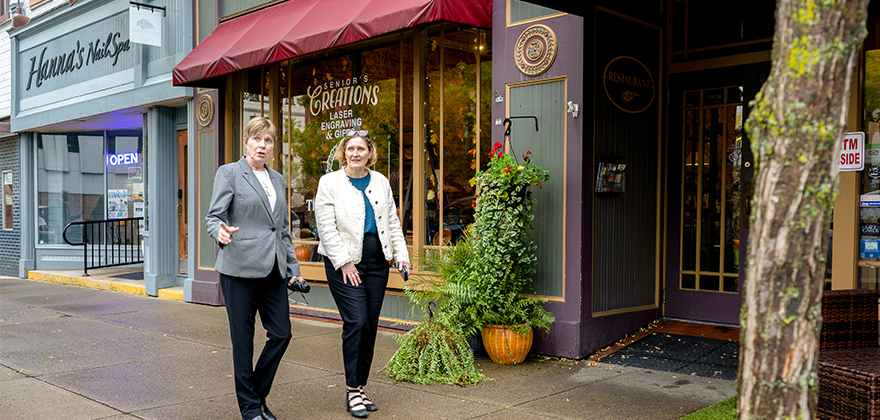
Later that morning, President Paulson walked Wellsboro’s Main Street with Julie Henry, executive director of the Wellsboro Area Chamber of Commerce. Along this corridor lined with Victorian gas lamps, business owners shared how they are navigating the current environment.
In this town of fewer than 3,500 residents, small businesses operate as a cohesive unit with close ties to the community. At Dunham's, a 100-plus-year-old department store, the café buzzes with locals sharing coffee, breakfast, and conversation, while the store itself offers clothing, cookware, hardware, and services like dry cleaning.
Pop's Culture Shoppe, a destination for comic book and game collectors, doubles as an informal visitor center and community hub. It stocks local artists' puzzles, hosts game nights that benefit community arts programs, and offers kids a free space to go after school. Beck's Bistro, a casual dining spot, shares a building with the Deane Center for the Performing Arts, making the transition from dinner to a show seamless.
Local shops stock different items and cooperate rather than compete, serving both residents and a growing tourist sector. Despite high fuel prices, the area is seeing more families seeking affordable vacations. "Everyone promotes everyone else," Henry said. "It's that partnership that gives these businesses the ability to stay open."
Building Opportunity, One Obstacle at a Time
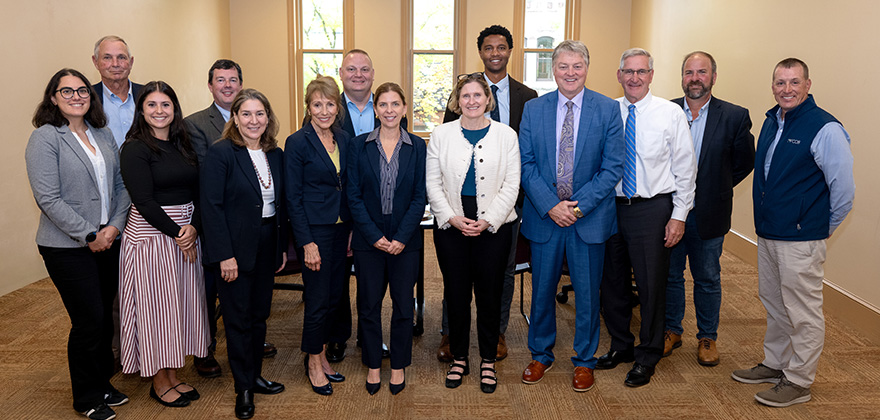
During a roundtable hosted at the performing arts center, President Paulson sat down with regional leaders in economic development, business, and education to tackle a pressing question: What does it take to build a thriving business in a rural community — and open doors to opportunity for local residents?
Randy Black, president and CEO of Citizens Financial Services and a member of the Philadelphia Fed's board of directors, brought a community banker's perspective to the table, speaking to the realities of lending and investing in rural markets.
Population decline emerged as a central concern — particularly the exodus of young, working-age residents. "It's all about jobs and the ability to attract more businesses to our region," one participant said. "A lot of our best and brightest kids are graduating and going to other places."
On talent development, participants pointed to in-house training as a way workers can advance without leaving their employer. One leader described a push to train more high school students in welding, a high-demand skill, by pursuing an alternative certification for vocational teachers, allowing them to acquire the necessary qualification without having to travel to one of only three universities in the state that offer the credential.
Other labor force issues surfaced too. Cuts to special education resources, for instance, can push parents out of the workforce entirely, triggering ripple effects across the local economy.
Despite these headwinds, optimism carried the room. According to one participant, the regional economy is on the upswing thanks to strong local leadership.
A Pulse Check with Williamsport Employers
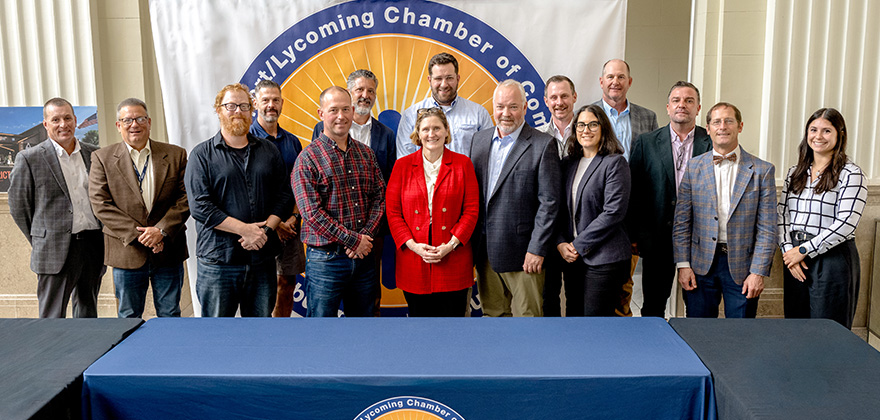
The next day, in Williamsport, the seat of Lycoming County, business leaders across the manufacturing, construction, energy, transportation, and food and beverage sectors shared candid insights. They spoke at a roundtable held in partnership with the Williamsport/Lycoming Chamber of Commerce.
Once known as the “Lumber Capital of the World,” downtown Williamsport still contains traces of that grandeur, although its economy now centers on healthcare, education, and manufacturing and logistics.
Leaders discussed the challenges of operating in today's shifting business landscape, highlighting the importance of strong supply chain management, effective cost control, and competitive compensation packages. Despite these obstacles, businesses remain optimistic, pointing to continued opportunities for growth.
Once again, attracting and retaining skilled workers emerged as a central concern. Many employers in the room described turning to creative solutions to secure top talent. "We're doing things we never did before to find the next generation of workers," one participant said.
Bucking the Trend in Higher Ed
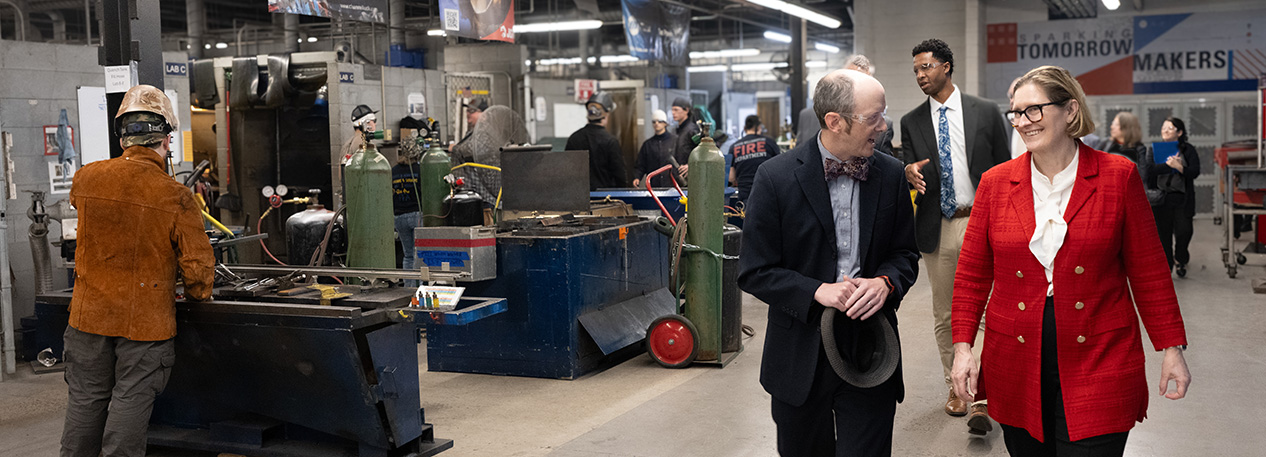
Later, on the bustling campus of the Pennsylvania College of Technology (Penn College), President Paulson saw how the school defies national trends in higher education. After falling nearly 15 percent between 2010 and 2022, U.S. undergraduate enrollment has only modestly recovered. At Penn College, it’s up 12 percent since 2022.
The reason: a focus on applied technology and workforce-aligned programs. The college offers nearly 100 hands-on majors in high-demand fields like robotics, engineering technologies, construction, and healthcare, along with reskilling options and stackable credentials. It has also added an online HVAC completion bachelor's degree and AI minors in response to industry demand.
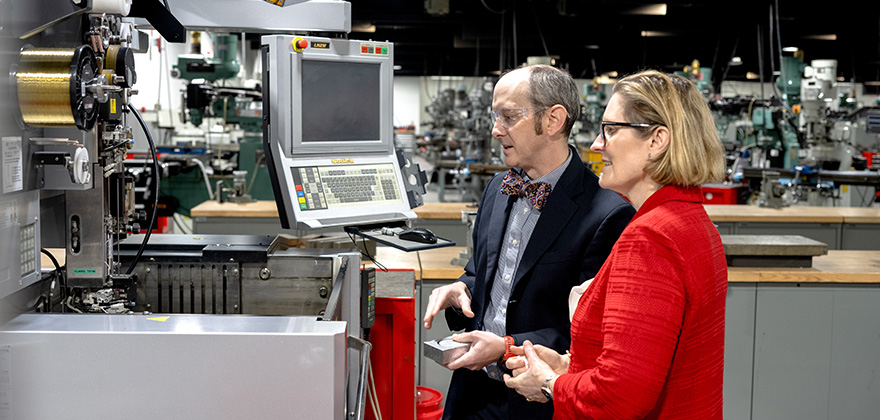
Touring the precision machining, welding, and emergency management labs, President Paulson met two members of Penn College's Baja SAE club — where students build single-seat vehicles almost entirely from scratch for international competitions — and watched demonstrations in the Emergency Management & Homeland Security program's crisis simulation lab.
Relationships with over 4,000 industry partners drive Penn College's success. Many of these employers offer internships and scholarships, and they also supply equipment and software to enable students to train on the same machines they'll use on the job, across more than 150 specialized labs.
"We couldn’t do what we do without our industry partners," said President Michael J. Reed over lunch with college leaders. “We made over 200 curriculum changes last year based on industry and faculty feedback to ensure our students are prepared to solve the challenges of today and tomorrow.”
That integration fuels a powerful talent pipeline. The school has a 98 percent placement rate, with employers recruiting students before they even graduate, and alumni earning 36 percent higher wages than the average college graduate.
One familiar issue loomed large. Demand for skilled workers far outstrips supply. Reed recalled an employer wanting to hire 200 graduates in a field where the college produces just 20 a year.
Reflecting on her visit, President Paulson noted how important these conversations are to her. "What I've learned over the past two days shapes my views on the economy and helps the Philadelphia Fed offer better support — including data that can inform local development efforts. When we see what's working in one community, we can share those strategies with others in our District facing similar challenges and help make connections. All of this adds up to a stronger region.”
About President Paulson’s Community Tours
Philadelphia Fed President and CEO Anna Paulson is visiting communities throughout the Third Federal Reserve District to hear the perspectives of residents and communities and to learn about the region’s economy. The Philadelphia Fed serves Delaware, southern New Jersey, and eastern and central Pennsylvania. The insights President Paulson gains will deepen her knowledge of the region and inform her work representing the region in monetary policy discussions at the Federal Open Market Committee.
- Economic impact data come from analysis by the Center for Dairy Excellence based on the 2022 NASS Agricultural Census. The figure reflects the sum of the economic impact for the five counties of the Northern Tier, which includes Tioga County.
- Calculated using 2025 population estimates for each county from the U.S. Census Bureau Quick Facts.
- According to the USDA Census of Agriculture's raw dataset (Volume 1, Chapter 1, Table 17), 834 of the nation’s 24,082 dairy farms own 2,500 or more cows. The journalists who authored this Investigate Midwest article used information from the dataset to state that large-scale operations control a 45 percent ($23.5 billion) share of the nation's $52.8 billion in milk sales.