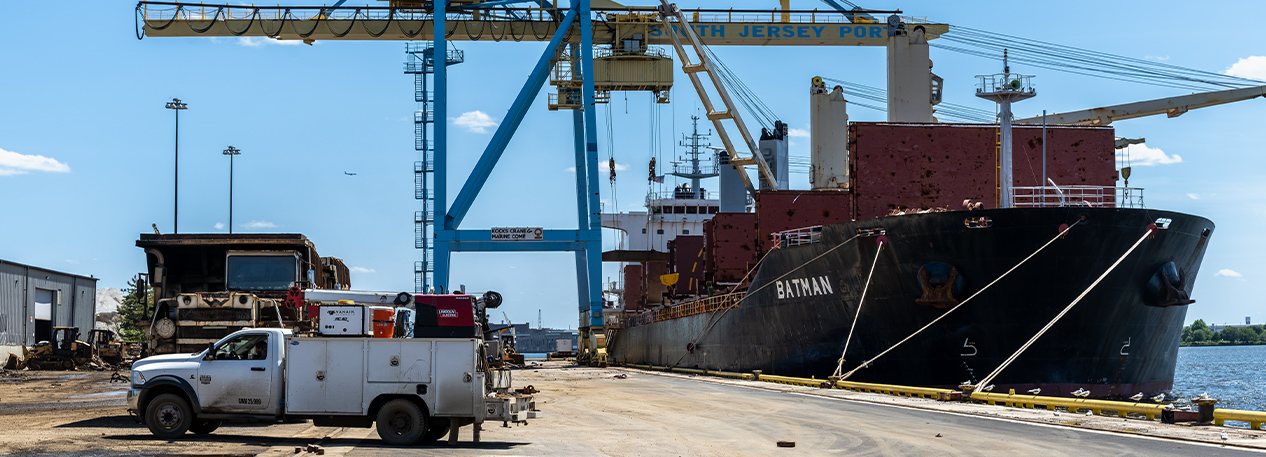


A port in motion. A roundtable of business leaders. A classroom of young workers training for tomorrow's jobs. Over two days in South Jersey, Philadelphia Fed President and CEO Anna Paulson got a chance to hear what data alone can often miss.
Numbers provide the foundation, but understanding what's driving them — and what may be coming next — requires conversation. "It's the stories and real experiences that make the data come alive," she said, "whether from an employer, a business, or someone looking for a job."
Across the Philadelphia Fed's Third District, which covers Delaware, southern New Jersey, and eastern and central Pennsylvania, these engagements provide essential on-the-ground insights that help President Paulson stay connected to the communities she represents. They are also key to how she brings these local perspectives into national monetary policy discussions.
On a Ship in Camden
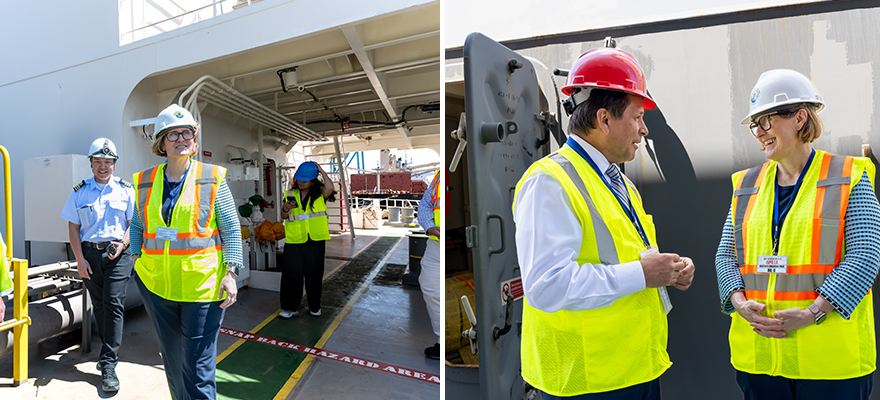
A stop at the Port of Camden brought those insights into sharp focus. At the busy Balzano Marine Terminal, steel coils stack high in warehouses while trucks and cranes work in unison to hoist massive beams onto and off of cargo ships. President Paulson spent the afternoon with the people who move the region's raw materials. Unlike the more retail-heavy container ports to the north, South Jersey's docks handle the inputs of construction and manufacturing, making their cargo an early indicator of industrial demand.
Lately, that indicator has been pointing to uncertainty.
"We're operating in uncharted territory," said Brendan Tugan, the port's commercial chief. "Even our customers can't plan, because there's no normal."
The pre-tariff rush to purchase goods, for example, created bottlenecks that long outlasted the buying surge itself. Cargo sat on docks as buyers worked through their own production delays, while ships waited offshore to unload. Tariffs helped some domestic producers but created significant challenges for others. Yet business leaders agreed the real issue wasn't price — it was their inability to plan ahead.
That theme — uncertainty — would echo through every conversation.
Growth Isn't One Story
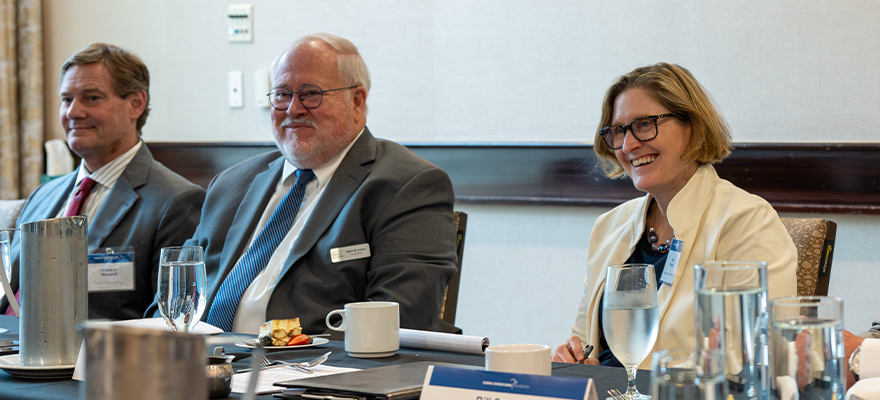
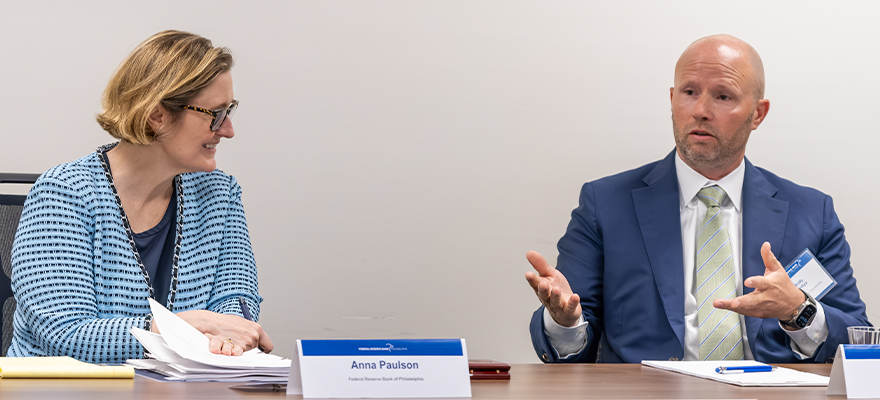
A day earlier, President Paulson heard how that uncertainty was playing out across different industries at a roundtable of regional business leaders. The picture grew more complex. A precast-concrete executive said business was expanding "exponentially," while a produce processor who'd seen explosive growth called the last 18 months merely "modest." A heating oil company president spoke about sporadic growth that often depends on the weather.
A headline average might miss the nuances behind these insights.
But two pressures emerged consistently in both roundtable discussions. The first was structural labor shortages, especially for long-haul drivers and skilled laborers willing to work long hours in oftentimes tough conditions. The second was health care costs. Many business leaders described premiums climbing steeply — some by 30 percent or more. The increases, they say, have quietly eroded wage gains and challenged their ability both attract and retain talent. Health benefits are essential to provide to employees, but rising costs are making them increasingly difficult to afford.
New Perspectives on the Future of Work
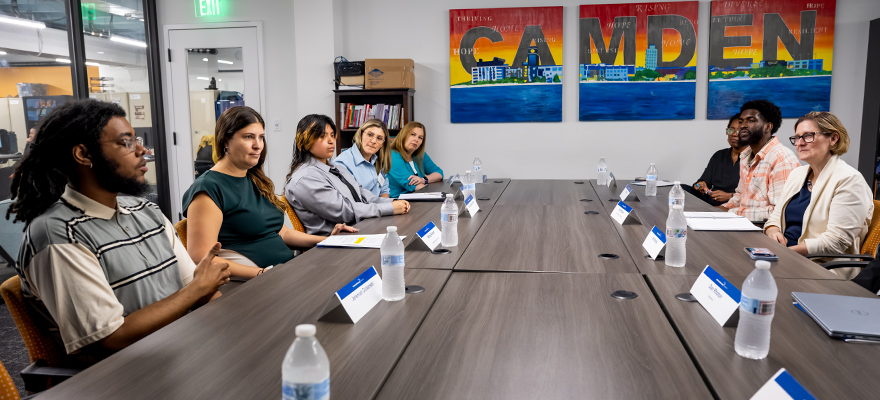
The leaders around that table had worried about where their workers would come from. Another one of President Paulson's stops offered an answer — and a reason for optimism.
At Hopeworks in Camden, she found a workforce training program built on a support system that works: morning huddles and safety plans, a coach for every trainee, even work clothes when needed. And from the start, trainees are paid.
The premise is that getting a job — and keeping it — takes more than technical skills. The program blends knowledge in IT, data, AI, and cybersecurity with the workplace habits that foster success: showing up, communicating, asking for help.
"Traditionally, the way you train people is like trying to learn to play basketball by reading about it," said Dan Rhoton, who leads the organization. "Our interns are in the work."
Coaches offer guidance on everything from technical questions to navigating workplace dynamics — like how to raise a scheduling conflict so it lands as something to work around, not a barrier.
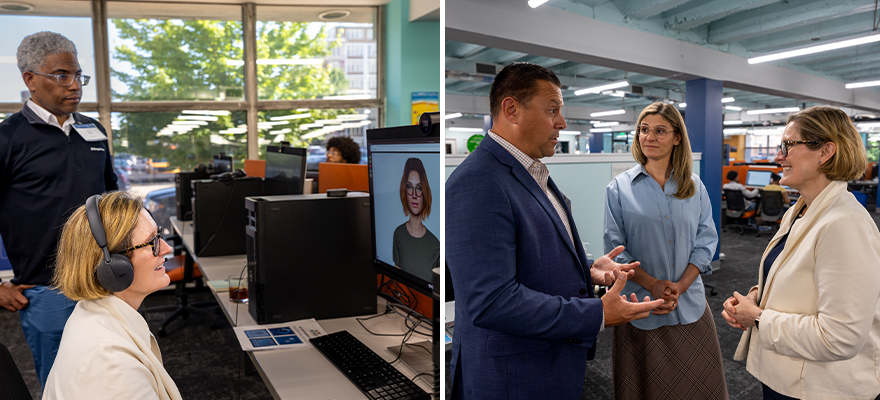
Demand has grown so fast that the wait list doubled when the program opened a new site, driven largely by word of mouth. "Every graduate refers more than two others," Rhoton noted.
Employers keep coming back, too. One company that started with three slots soon asked to fill 30 more. But what's most telling is what happens after the hire: Roughly 96 percent of the young people placed by the program remain employed a year later.
And when asked where they wanted to be in five years, they didn't fixate on titles or positions — they focused on continuing to grow.
Small Businesses Navigate Headwinds
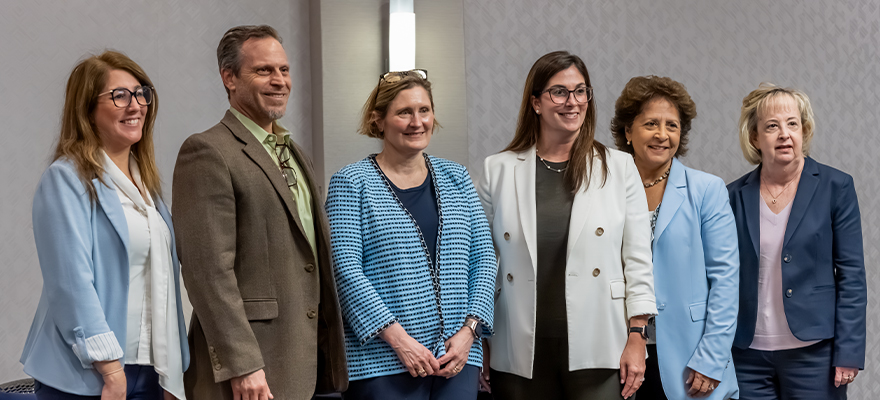
At the Chamber of Commerce Southern New Jersey, President Paulson sat down with Chamber President Christina Renna after offering her economic outlook. The conversation turned to how businesses — especially small ones — are faring.
"About 80 to 85 percent of our member businesses are small," Renna noted, "the kind that are nimble and flexible, but for whom the uncertainty is really the question mark." Small firms have fewer reserves to absorb a shock and face the same competitive pressures as larger ones, but with less room to pass along higher costs.
The discussion also touched on artificial intelligence — a force that could either ease or intensify those pressures. President Paulson outlined three scenarios she's been tracking: AI as a broad productivity accelerator, AI as a disruptor that reshapes some jobs while creating new roles in others, and AI as a primary driver of job losses.
Across her regional conversations, the middle scenario has emerged most consistently. Organizations are using AI for routine work like summarizing reports or flagging errors, and refocusing employees toward relationship-building and revenue-generating work. One leader captured the approach simply: treat AI as a power tool that sharpens strategic thinking, not as a replacement for it.
Credit Is Available, but Caution Prevails
Her final roundtable reinforced what she'd been hearing all along: businesses aren't struggling to find resources — but uncertainty and rising costs are having an impact.
Community bankers described local economies that are steady but cautious. Businesses and consumers continue to show resilience, and bankers see real growth opportunities in their regions — but uncertainty about what comes next continues to affect their outlook.
"Community bankers see economic conditions play out in real time," President Paulson said. "They're watching businesses weigh every decision and investment more carefully, even when credit is available. That caution tells us as much about the economy as any data point."
The Story Behind the Numbers
Two things stayed with President Paulson from those two days: an economy holding steady through considerable turbulence, and the determination of those navigating it.
The trainees at Hopeworks made the strongest impression — young people who have overcome adversity to prepare for careers as innovators, bankers, and business leaders. They represented both the labor shortage solution businesses were seeking and the resilience the broader economy needs.
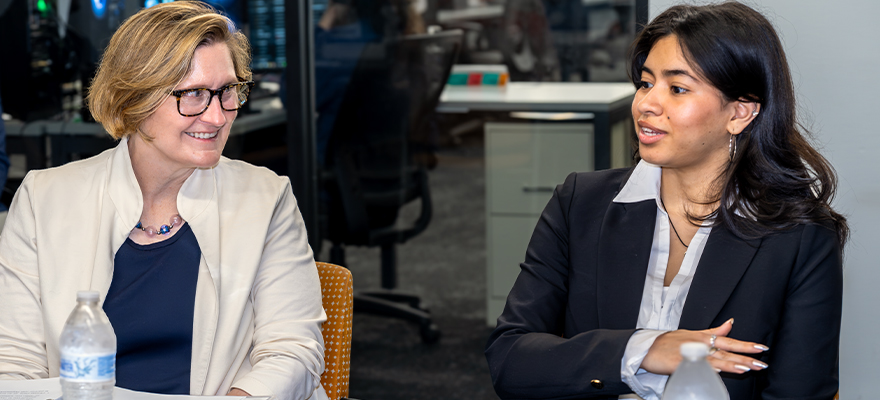
Numbers matter, President Paulson observed, but they're only part of the story. The experiences behind them — the adaptability, the uncertainty, the perseverance — can't be captured in data. Which is precisely why she keeps returning to hear them in person.
About President Paulson’s Community Tours
Philadelphia Fed President and CEO Anna Paulson is visiting communities throughout the Third Federal Reserve District to hear the perspectives of residents and communities and to learn about the region’s economy. The Philadelphia Fed serves Delaware, southern New Jersey, and eastern and central Pennsylvania. The insights President Paulson gains will deepen her knowledge of the region and inform her work representing the region in monetary policy discussions at the Federal Open Market Committee.