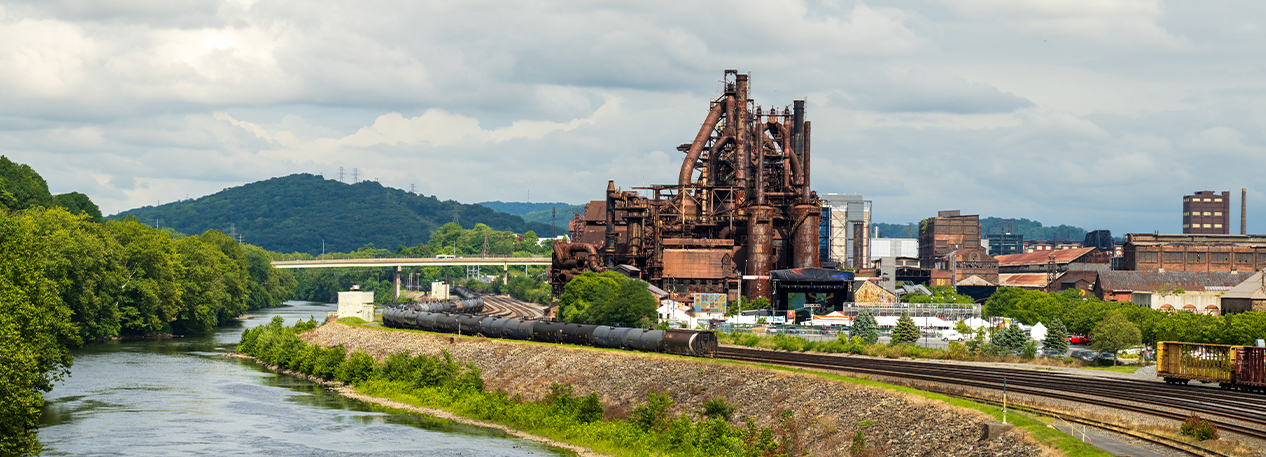


How did a Rust Belt region find a way to shine again? Philadelphia Fed President and CEO Anna Paulson visited Allentown in Pennsylvania’s Lehigh Valley to find out.
Once a symbol of America's postindustrial decline as made famous by Billy Joel’s song of the same name, Allentown has undergone significant changes alongside the broader Lehigh Valley. The once-struggling area has become a thriving region anchored by diverse industries and steady economic growth.
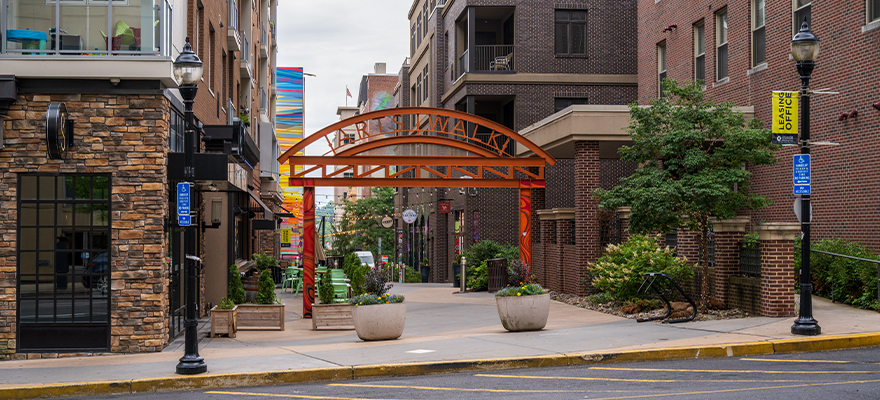
The Power of Regional Cooperation
The region's turnaround began with a simple but powerful idea: Compete as one.
Thirty years ago, leaders across two counties, three cities, and 62 municipalities made a strategic choice. Rather than competing against each other, they would work together as a unified region.
"That vision and strategy has allowed us to prepare sites, build workforce pipelines, invest in infrastructure, and respond when opportunity emerged," said Don Cunningham, president and CEO of the Lehigh Valley Economic Development Corporation (LVEDC).
The LVEDC, funded by both public and private dollars, has been pivotal to this success. The organization attracts and retains businesses, partners with colleges and workforce development programs, and connects talent to local jobs. Its 2025 annual report lists 48 large-scale projects currently underway, representing nearly $4 billion in investment.1
The results speak for themselves: Site Selection Magazine named the Lehigh Valley the number one midsize market in the country in 2025 for the second time in three years. Earlier this year, the Lehigh Valley landed its largest single investment ever and the largest life sciences project in Pennsylvania history.2
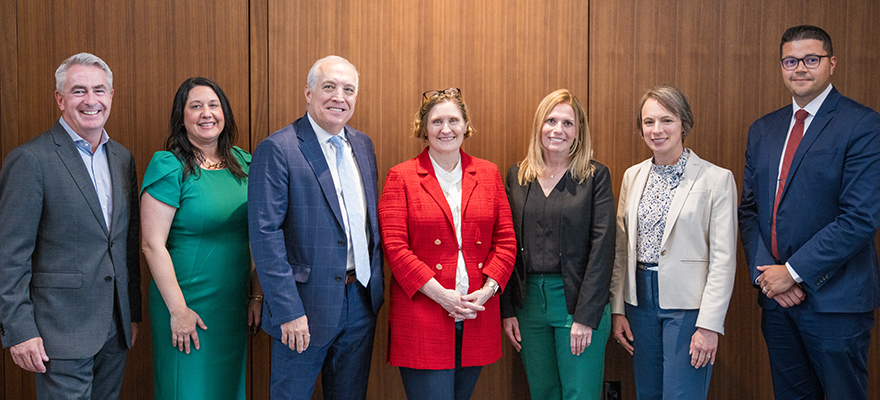
Another regional strength is a robust civic sector. Two groups from the area participated in the Philadelphia Fed's Reinventing Our Communities Cohort Program, which helps cross-sector coalitions develop solutions to grow small businesses and increase economic opportunities locally.
The Secrets to Success
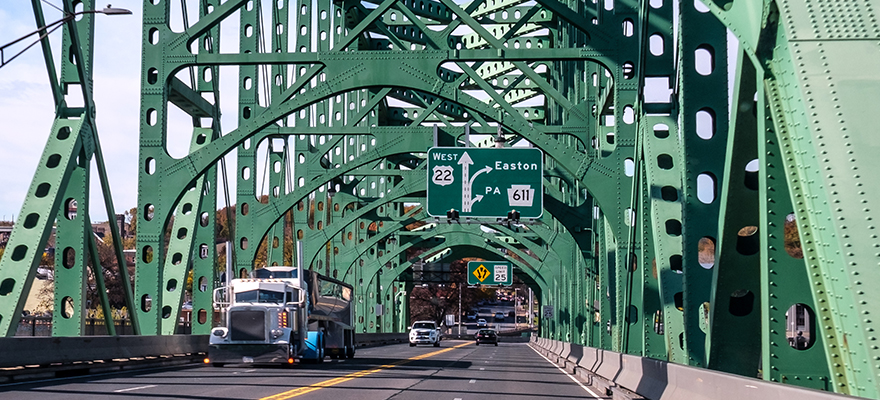
As they say in real estate: location, location, location. Thanks to its proximity to major northeastern markets, the region has become an important logistics hub. Warehousing and transportation now account for 8.6 percent of private sector employment — well above the national average of 4.8 percent.3
But the region hasn't abandoned its manufacturing roots. While many regions saw manufacturing decline, the Lehigh Valley has bucked the trend. Manufacturing represents 11 percent of the metro area's private employment, compared with 9.3 percent nationally. Around 40,000 workers produce everything from candy and semiconductors to vaccines and vehicles.4
During her visit, President Paulson also met with local community bankers who serve as the financial backbone of the regional economy, providing lending and credit to small businesses and residents. These conversations reinforced an important reality: Sustainable economic growth requires investment and collaboration across all sectors.
Growing Pains
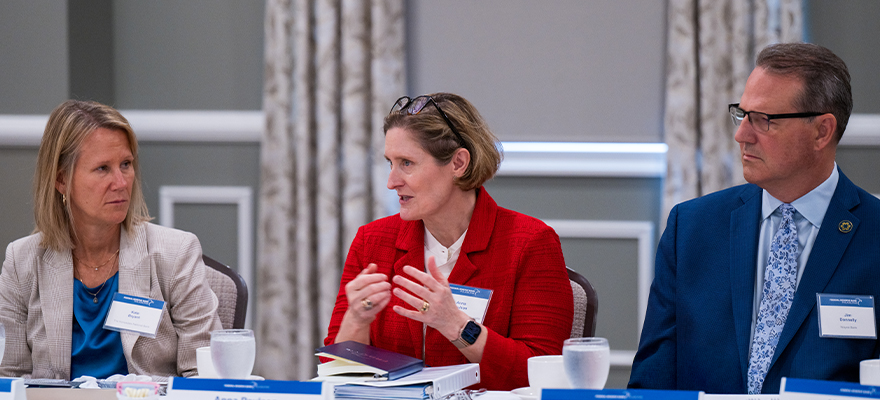
That strong growth brings its own considerations that local leaders are working to address. During a roundtable with executives representing the manufacturing, logistics, healthcare, professional services, and construction sectors, several themes emerged. They include creating sufficient housing stock to support population growth, navigating a dynamic business environment, and the need to match training and education to advanced manufacturing and technology roles.
These are the kinds of on-the-ground insights that matter — giving President Paulson a clearer understanding of how regions are adapting to evolving economic realities and how monetary policy connects to people's everyday lives.
Looking Ahead
“Learning how communities are preparing for the economy of tomorrow informs my thinking on monetary policy and guides the Philadelphia Fed's research and programming,” remarked President Paulson.
The Lehigh Valley's story provides a blueprint for how regional cooperation, strategic investment, and sustained public-private partnerships can breathe new life into communities. This transformation offers lessons for other regions responding to economic change.
“As the Philadelphia Fed continues its work across the Third District, these insights will shape how the Bank supports strong, stable, and inclusive economic growth,” said President Paulson.
About President Paulson’s Community Tours
Philadelphia Fed President and CEO Anna Paulson is visiting communities throughout the Third Federal Reserve District to hear the perspectives of residents and communities and to learn about the region’s economy. The Philadelphia Fed serves Delaware, southern New Jersey, and eastern and central Pennsylvania. The insights President Paulson gains will deepen her knowledge of the region and inform her work representing the region in monetary policy discussions at the Federal Open Market Committee.
- LVEDC, 2025 Annual Report, March 17, 2026.
- Paul Muschick and Nicole Radzievich Mertz, “Lilly’s Historic $3.5B Investment Propels Lehigh Valley into New Era of Manufacturing,” LVEDC, January 30, 2026.
- The regional figures are for the Allentown-Bethlehem-Easton metropolitan statistical area. See U.S. Bureau of Labor Statistics, “Employees on Nonfarm Payrolls by Industry Sector and Selected Industry Detail,” accessed August 6, 2026; U.S. Bureau of Labor Statistics, "Allentown-Bethlehem-Easton, PA-NJ," accessed August 6, 2026; and U.S. Bureau of Labor Statistics and Federal Reserve Bank of St. Louis, “All Employees: Transportation and Utilities: Transportation and Warehousing in Allentown-Bethlehem-Easton, PA-NJ (MSA) [SMU42109004340008901],” retrieved from FRED, Federal Reserve Bank of St. Louis, August 7, 2026.
- The 40,000 figure is for the Allentown-Bethlehem-Easton metropolitan statistical area. See U.S. Bureau of Labor Statistics, “Allentown, PA-NJ, Area Economic Summary,” July 7, 2026; and U.S. Bureau of Labor Statistics, “All Employees: Manufacturing in Allentown-Bethlehem-Easton, PA-NJ (MSA) [ALLE942MFGN],” retrieved from FRED, Federal Reserve Bank of St. Louis, August 7, 2026.